
Psalm 1 sets the tone for the entire Psalter: “Blessed is the man who walks not in the counsel of the ungodly, nor stands in the path of sinners, nor sits in the seat of the scornful; but his delight is in the Law of the LORD, and in His Law he meditates day and night” (vv. 1-2). This “blessed man” is not a vague religious ideal; he is both a real example of the righteous believer and, ultimately, a prophetic figure of Christ Himself, who perfectly fulfills what the Law demands and delights perfectly in God’s Word.
Psalm 119, in turn, is the Spirit-inspired expansion of what this blessed life looks like. Across 176 verses—organized alphabetically in 22 stanzas as an acrostic poem based on the Hebrew alphabet—it gives concrete, poetic, and prayerful expression to what it means to delight in the Torah of the Lord. This psalm is not merely a didactic tool but a living prayer that shapes hearts to cling to the Word and to Christ Himself, the Word made flesh.
Psalms 1 and 119 together frame the life of faith not as abstract piety but as a daily walk in God’s Word. Psalm 1 provides the blueprint—the righteous man is marked by separation from evil, a meditative posture toward the Word, and rooted fruitfulness. Psalm 119 takes this outline and colors it in with lived experience: the groaning under affliction, the resolve to walk in God’s ways, the tears of repentance, and the joy of God’s promises. It clarifies that the blessed man’s life is not pristine—it is pierced by suffering and sorrow, but it’s also upheld by God’s Word.
For pastors, this connection is vital. We teach our people not only to aspire to the blessedness of Psalm 1 but also to recognize themselves within the cries of Psalm 119 (as well as all the Psalms), and ultimately to see Jesus in each of them. The blessed man is neither untouched by grief nor sinless in his record, but is marked by his clinging to God’s Word in the midst of it all. We do not become this man by moral effort but by faith in Christ, who is the true Blessed Man on our behalf.
The Blessed Man Delights in the Word (Psalms 1:2; 119:16, 24, 47)

In Psalm 1, the blessed man is marked by delight, not mere duty. This is not begrudging obedience but joyful meditation: “His delight is in the Law of the Lord.” Psalm 119 repeats this theme with fervor: “I will delight myself in Your statutes; I will not forget Your Word” (v. 16); “Your testimonies also are my delight and my counselors” (v. 24); “And I will delight myself in Your commandments, which I love” (v. 47).
This delight is not rooted in the Law as a system of works-righteousness. Rather, it’s the Law in the wider sense: Torah as God’s instruction—His revealed will—which includes not only His Commandments but also His promises, judgements, and covenantal care. This delight is not something the blessed man does, but rather a state he is given. “A state is something we are either in or not in. Instead of giving us tasks to do, ‘delight’ is actually something that we hav been given, something that we experience. In other words, delighting in Torah is not something we can rationally choose to do, even if we want to, just like we can’t choose to like broccoli or forces ourselves to fall in love. Delight cannot be imposed upon someone, nor can we conjure it up in ourselves. You either get it or you do not… Delight is more like a gift than an achievement” (Saleska, 141).
Psalm 119 overflows with the love for this full revelation, which for us is centered in Christ. As Luther writes in his Preface to the Psalter:
The Psalter ought to be a precious and beloved book, if for no other reason than this: it promises Christ’s death and resurrection so clearly—and pictures His kingdom and the condition and nature of all Christendom—that it might well be called a little Bible. In it is comprehended most beautifully and briefly everything that is in the entire Bible. It is really a fine enchiridion or handbook. In fact, I have a notion that the Holy Spirit wanted to take the trouble Himself to compile a short Bible and book of examples of all Christendom or all saints, so that anyone who could not read the whole Bible would here have anyway almost an entire summary of it, comprised in one little book.
LW 35:254
Psalm 119 reminds the Christian that delight is not always spontaneous but often cultivated by returning to the Word in prayer and meditation, especially during affliction (oratio, meditatio, tentatio; more on this below). In the Christian life, there are dry seasons when God seems distant and our delight wanes. Yet even then, the psalmist models how one prays through dryness: “My soul clings to the dust; revive me according to Your Word” (v. 25).
Delight in God’s Word is ultimately delight in Christ, for He is the substance of the Word. He’s the One of whom the Law, the Prophets, and the Psalms testify (Luke 24:44). Thus, when we delight in the Law of the Lord, we are delighting in the Gospel as well. The blessed man of Psalms 1 and 119 is not legalistic but evangelical in the deepest sense—filled with joy because God announces the Good News that gives life.
If this sounds contradictory because the Law reveals our sins and the Gospel delivers forgiveness of sins, remember that second use of the Law also reveals our need for a Savior. The Law demands not only repentance but also drives us to the One who gives, that is, it prepares our hearts to receive the Gospel. In the broad sense, the Gospel includes both repentance and forgiveness of sins. As our Confessions say, “The Gospel convicts all people that they are under sin, that they are subject to eternal wrath and death. It offers, for Christ’s sake, forgiveness of sin and justification, which is received through faith” (Ap IV, 62). It is the strict sense of the Gospel by which we mean it comforts consciences (see FC Ep V, 7). In its wide sense, the Gospel does not omit the Law but utilizes it to bring the sinner to itself—indeed, in order to exercise its strict meaning. The Law, appropriately applied, always serves the Gospel.
The Blessed Man Meditates Day & Night (Psalms 1:2; 119:97, 148)

Psalm 1 presents meditation as the lifestyle of the blessed. Meditation, in the biblical sense, is not the meditation of Eastern religions that empties the mind but one of filling it with God’s Word. Psalm 119 illustrates what this looks like in real life: “Oh, how I love Your Law! It is my meditation all the day” (v. 97), and “My eyes are awake through the night watches, that I may meditate on Your Word” (v. 148).
The life of faith is not compartmentalized—we don’t have our work life, our family life, and our church life. There’s only life. God’s Word does not merely govern Sunday morning or private devotion time—it invades the day and the night, joys and sorrows, triumphs and trials. In this way, Psalm 119 shows how Psalm 1 becomes real for the believer who returns daily to the Word in prayer, reflection, confession, and hope.
This meditation is not simply mental exercise but a sacramental participation in God’s speech. Through the Word, God not only teaches but also gives Himself to the hearer. The believer meditates to receive the Lord Himself, not only to understand. As the psalmist writes, “You are my portion, O LORD” (v. 57a). As good as they are, the psalmist’s portion is not God’s gifts and blessings, but God Himself. “You are my portion,” he says. “I have said that I would keep Your words” (v. 57b). The Word is thus the conduit through which the Holy Spirit sustains faith and conforms the believer to Christ (cf. Romans 12:1-2). This is why, as Lutherans, we see no contradiction between deep, ongoing meditation on Scripture and the liturgical rhythm of the Church—it’s all God’s Word, speaking to us and shaping us.
Meditation day and night is not just about frequency but totality—it means the Word becomes the lens through which the whole life is interpreted. Our lives and circumstances don’t interpret God’s Word; the Word interprets us. Whether in times of temptation, loss, rejoicing, or routine, the Word is ever near. The blessed man does not meditate because he’s mastered the Word or to become a master of it, but because he knows he cannot live without it. His heart is tethered to the Word like a vine clings to a trellis—so that he might bear fruit in every season.
The Blessed Man is Rooted, Not Drifting (Psalms 1:3-4; 119:31, 89-93)
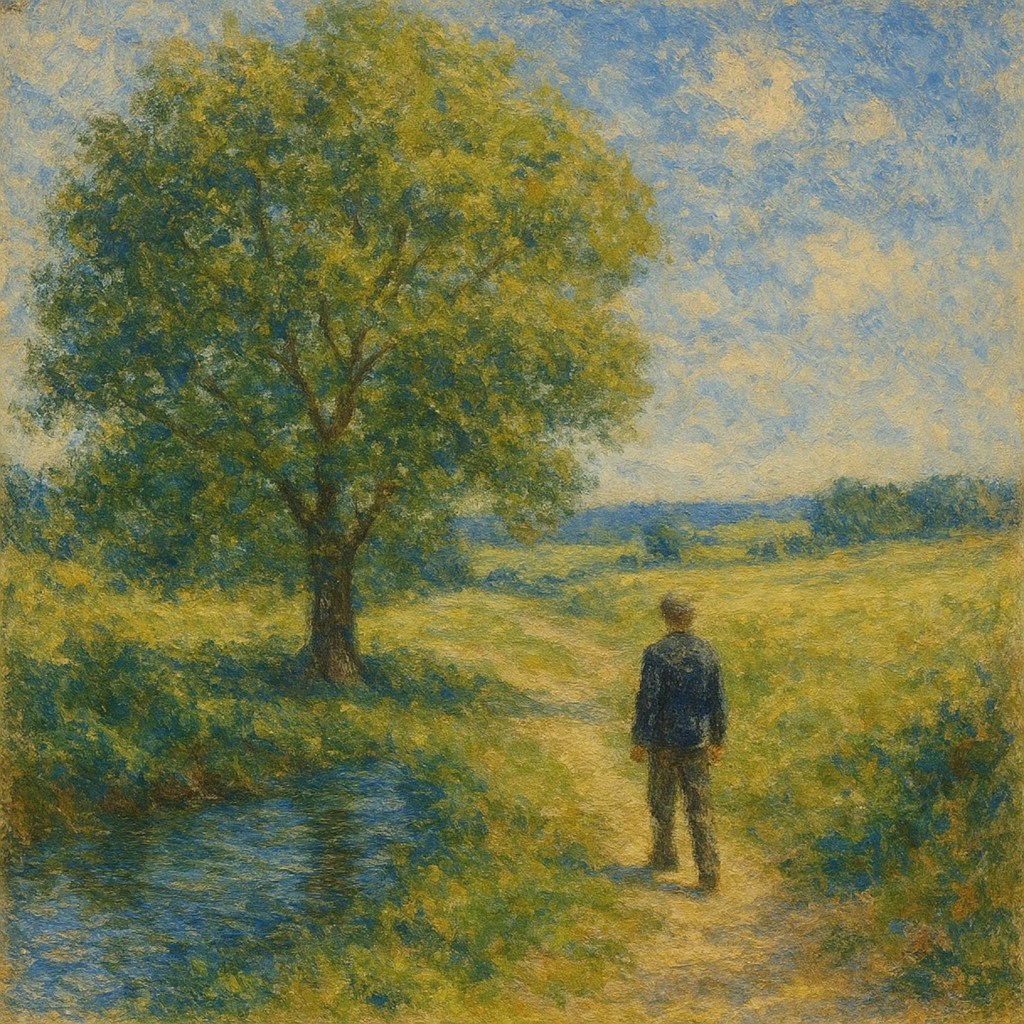
Psalm 1 contrasts the rooted man and the feckless, drifting chaff. The blessed one “shall be like a tree planted by the rivers of water” (1:3), whereas the ungodly “are not so, but are like the chaff which the wind drives away” (v. 4). Psalm 119 fleshes this out by giving voice to the rooted believer: “I cling to Your testimonies; O LORD, do not put me to shame!” (v. 31); “Forever, O LORD, Your Word is settled in Heaven… Unless Your Law had been my delight, I would then have perished in my affliction” (vv. 89, 92).
The believer is not rooted in his own righteousness or strength but in the settled, eternal Word of the Lord. The Law of the Lord is not shifting sand; it’s our anchor in affliction and our foundation for perseverance. To reiterate, the Law, in its broader biblical sense, includes the Gospel promises of God’s deliverance—particularly as these promises culminate in Christ. Therefore, Psalm 119 shows us that to be rooted in the Law is to be rooted in Christ, even when the storms rage.
As Lutherans, we confess the believer remains simul iustus et peccator (simultaneously saint and sinner). Thus, the need for rootedness is constant. The chaff is not merely “those people out there” but the part of us that resists God’s Word—that drifts with the fleeting winds of culture or temptation. But in the daily return to God’s Word—through Confession & Absolution, through prayer and meditation—the Spirit roots us again in Christ, who holds us firm when we cannot hold ourselves.
Psalm 119 does not present a man with deep roots as one who has no storms. In fact, the psalmist pleads with God in the midst of affliction, exile, and sorrow. Yet the difference between the tree and the chaff is not the absence of suffering but the presence of a source of life that endures. That source is God’s Word. And in the Church, that Word is given richly in the Scriptures, the preaching of Christ crucified, and the Sacraments that nourish our weary souls.
The Blessed Man Bears Fruit in Season (Psalms 1:3; 119:1-8, 45, 105)

Psalm 1 promises the blessed man “brings forth its fruit in its season” (v. 3). This fruitfulness is the natural result of being rooted in God’s Word. It’s not the fruit that makes the tree good, but vice versa. In other words, it’s not the man’s doing that makes him good or blessed, but the state of his delight given by the Lord. Just as a tree does not ask whether it should produce fruit but has already done so and continues to do so, so “[Faith] does not ask whether good works are to be done, but before the question is asked, it has already done them, and is constantly doing them” (FC SD IV, 11). The blessed man produces fruit in his time because he was planted in the seed of the Word. A tree does not plant itself; it is planted by a gardener.
Psalm 119 opens by identifying the fruit of the Word in a believer’s life: “Blessed are the undefiled in the way, who walk in the Law of the LORD!” (v. 1). These blessings are not rewards for moral perfection but the fruits of a life lived under God’s instruction and mercy. “And I will walk at liberty, for I seek Your precepts” (v. 45); “Your Word is a lamp to my feet and a light to my path” (v. 105).
This fruit-bearing includes obedience, yes, but also repentance, humility, and trust. The psalmist frequently confesses his sin and weakness, e.g., “I have gone astray like a lost sheep; seek Your servant, for I do not forget Your commandments” (v. 176). The blessed man is not without sin; he’s one who is continually drawn back to the Word of life and restoration. His fruit is not the pride of spiritual achievement but the lowly fruit of the Spirit: love, joy, peace, patience, kindness, goodness, faithfulness, gentleness, and self-control (Galatians 5:22-23)—nurtured in him by the Spirit through the Means of Grace.
Good works and fruitfulness flow from faith like heat from fire. Psalm 119 shows us a man not merely obeying but yearning: “Behold, I long for Your precepts; revive me in Your righteousness… My soul faints for Your salvation, but I hope in Your Word” (vv. 40, 81). This inner transformation is the hallmark of the blessed life. Fruit in season doesn’t mean success at all times but a rhythm of faithfulness sustained by the God who gives growth. Just as a tree doesn’t bear fruit in winter, the Christian doesn’t always appear fruitful to the world—but in season, when the Word has had its way with the heart through its diligent watering, the fruit appears.
The believer’s life, then, is shaped by both abiding and waiting. Psalm 119 teaches us fruitfulness is not frantic activity but faithful rootedness. The psalmist waits on the Lord, walks in His precepts, and trusts fruit will come when and how God ordains, just as a farmer does in his field. In pastoral care, we teach our people this fruitfulness may include endurance through grief, patient love for a prodigal child, or the silent strength to pray for one’s enemies. These are not spectacular by the world’s standards, but they are fruit of faith in Christ.
The Blessed Man is Preserved through Affliction (Psalms 1:5-6; 119:67, 71, 75)
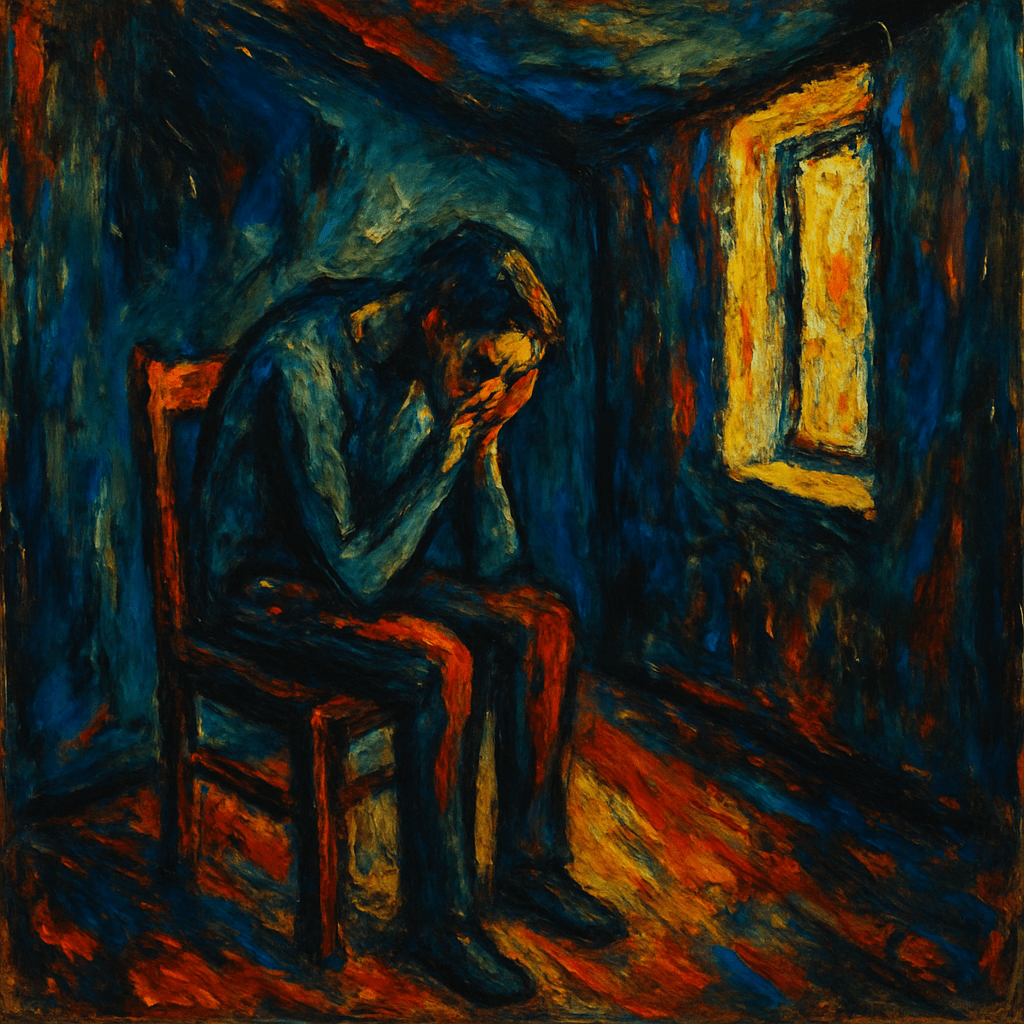
Psalm 1 assures us, “the LORD knows the way of the righteous” (v. 6), and this divine knowledge is not passive observation but covenantal care. Psalm 119 gives flesh to this promise by showing how the blessed one endures affliction through the Word: “Before I was afflicted I went astray, but now I keep Your Word” (v. 67); “It is good for me that I have been afflicted, that I may learn Your statutes” (v. 71); “I know, O LORD, that Your judgements are right, and that in faithfulness You have afflicted me” (v. 75).
This perfectly encapsulates Luther’s triad of oratio, meditatio, tentatio. In the above example, the psalmist confesses tentatio in verse 67—the inward and outward affliction God uses to draw the sinner back to His Word, that is, prayer (oratio). Then, in verse 71, the psalmist declares his meditatio—a chewing upon God’s Word in the midst of suffering, not in isolation or abstraction but in lived experience. We then see his oratio in verse 75—a prayerful submission to God’s faithfulness. He does not rage against God but turns to Him, clinging to His righteousness and praying from the depths of affliction (tentatio).
Luther insisted oratio, meditatio, tentatio is not a one-time formula but a daily cycle that deepens the Christian’s grasp of the Word—that it’s what makes one a true theologian. Psalm 119 exemplifies this cycle repeatedly. Affliction humbles the psalmist (tentatio), who then turns anew to the Word with thirst and hunger (meditatio), and pours out his soul before God (oratio). These verses show true theological understanding does not come by academic study alone but through the school of suffering, where the believer learns to cry out, “Teach me Your statutes,” and is blessed in doing so. The psalmist has not grown in the Word apart from affliction but precisely through it.
Suffering, therefore, is not a sign of God’s abandonment but of His refining faithfulness. Affliction teaches us to rely on the promises of God rather than on ourselves. Psalm 119 does not describe a trouble-free life; it describes the blessed life of a person sustained and corrected by the Word, not destroyed by suffering. As Luther wrote in his Heidelberg Disputation (1518), in thesis 18, “It is certain that man must utterly despair of his own ability before he is prepared to receive the grace of Christ” (LW 31:51).
This preservation through affliction does not come naturally. The psalmist’s trust is hard-won. It comes through tears, groaning, and lament. “My soul melts from heaviness; strengthen me according to Your Word” (Psalm 119:28). Yet the blessed man holds fast because he has something to hold to: God’s Word. In Lutheran pastoral theology, we see affliction as a school of faith where the Word of God tutors the soul in hope. Suffering becomes the soil where trust in Christ takes deeper root.
For the believer, this means we don’t merely survive affliction—we are sanctified through it. Not because suffering is inherently good, but because God’s promises are sufficient even there. “My grace is sufficient for you, for My strength is made perfect in weakness,” Christ says (2 Corinthians 12:9). Psalm 119 shows the sanctifying power of affliction not in abstract doctrine but in raw, poetic prayer. This is where the pastor can minister the most: not with platitudes and bumper sticker theology, but by delivering the Word that preserves the soul even when all else fails. The blessed man is not spared from affliction; he’s preserved through it (cf. Psalm 23:4).
Christ the Blessed Man and the Fulfillment of the Law
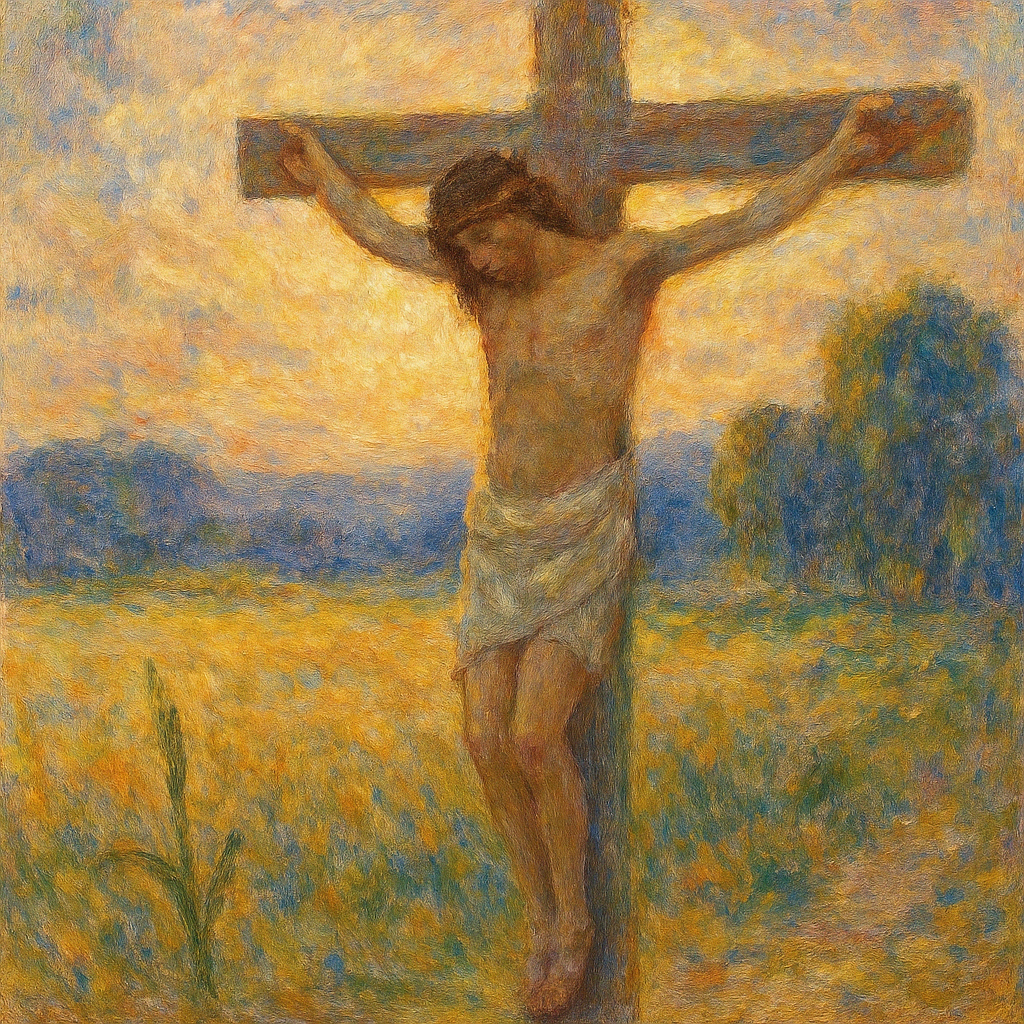
Ultimately, as has been said, the blessed man of Psalm 1 is not simply David or the anonymous psalmist. It is Christ Himself—the One who perfectly delights in the Law, who meditated upon it even in the night of Gethsemane and continues to meditate upon it in His ascension, and who is the Word incarnate. Psalm 119, then, becomes the inner prayer book of Christ, the Man of Sorrows who fulfilled the Law for us and suffered affliction in our place.
In Christ, Psalm 1 is fulfilled. In Him, we become the blessed man—not by our delight, but by His. In Him, Psalm 119 is our song—both Law and Gospel. The true Blessed Man has walked not in the counsel of the ungodly but in the counsel of His Father, for whom He also died for our justification (Romans 5:6-11). He did not stand in the path of sinners but stood in our place under the judgement of God (2 Corinthians 5:21; 1 Peter 2:24). He did not sit with the scornful but bore their scorn on the cross (Matthew 27:29-31, 38-44). And now, His perfect life is ours by grace.
This Christ-centered reading of the Psalms is the Lutheran hermeneutic: all Scripture testifies of Christ (John 5:39). When we read Psalm 119 as Christ’s prayer, we find our righteousness and comfort in Christ’s obedience, not our own. When we read Psalm 119 as our own prayer, we’re learning to cling to the Word that delivers Christ to us. The blessed man is not the strong man but the one who trusts in the Strong Savior. In Word and Sacrament, Christ is present to forgive, strengthen, and bless.
Thus, Psalms 1 and 119 together lead us to the cross. They invite us to see in Christ the fulfillment of the Law and the One who gives us His delight as a gift. For pastors, this is the heart of preaching and pastoral care: to comfort the afflicted, to root the penitent in the Word, and to present Christ as the Blessed One who makes us His blessed ones by grace alone.
Works Cited
Saleska, Timothy E. Psalm 1-50. Concordia Commentary. Saint Louis: Concordia Publishing House, 2020.
 The Lutheran Column
Thanksgiving
LikeLike