
In an age where the question “What is a woman?” has become politically loaded and culturally confused, the Scriptures provide clarity that transcends modern debates. Proverbs, a book of divine wisdom, speaks with poetic beauty and theological depth about what it means to be a woman—not according to human trends or philosophical speculation but according to the Word of God. Proverbs exalts womanhood as a living embodiment of wisdom, vocation, and virtue, not as an abstract ideal. She’s not merely a biological category, though she is that. She’s not a social construct, as some claim. She is a creature of God, made in His image, bearing unique gifts and holy vocations within His created order.
This article explores the contours of womanhood as defined and celebrated in Proverbs. It begins with the personification of Wisdom as a woman, moves to the blessings of a godly wife, warns against corrupt distortions of womanhood, and culminates in the majestic portrayal of the virtuous woman in the final chapter, Proverbs 31. Each section draws us deeper into God’s design, revealing a vision of woman that is both glorious and grounded, sacred and human, dignified and delightful.
The Personification of Wisdom
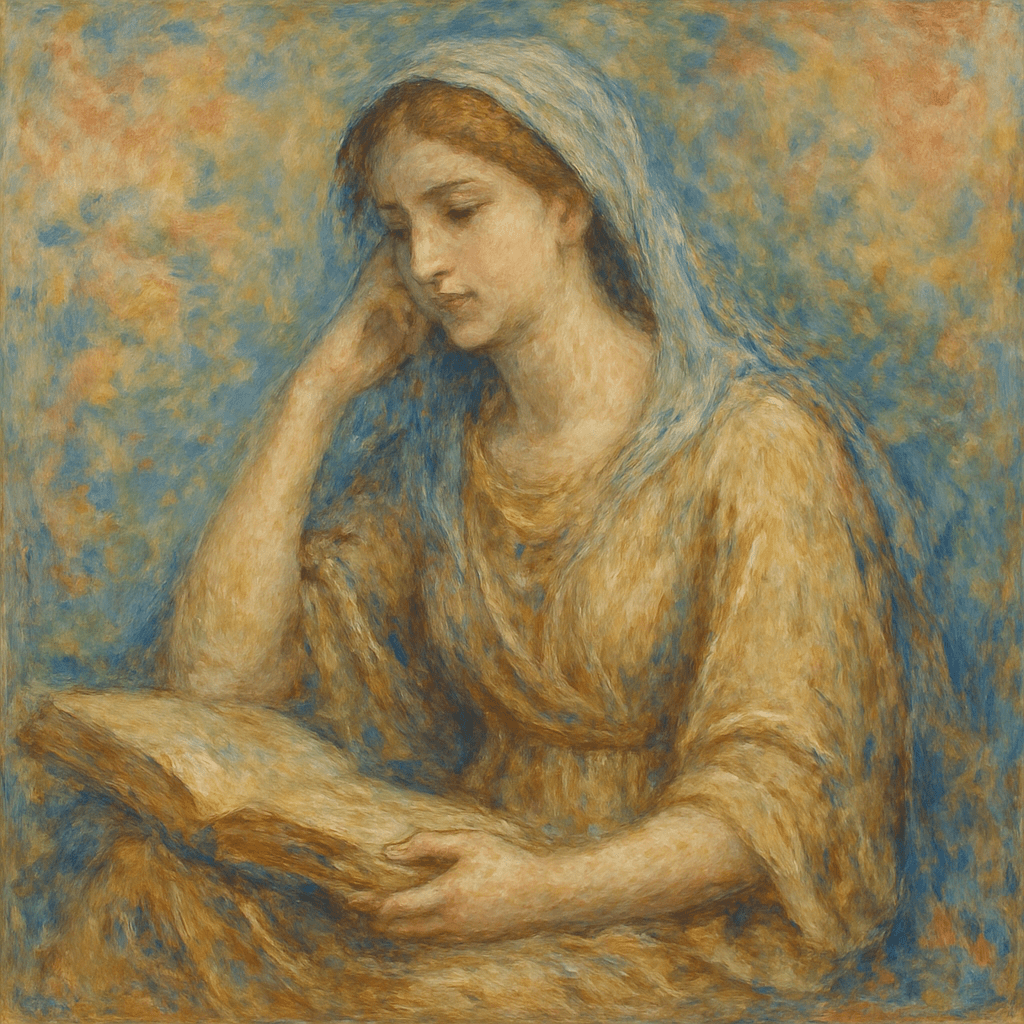
In the opening chapters of Proverbs, womanhood is elevated through the poetic device of personification—Wisdom is not merely a concept but a woman calling out in the streets (1:20), lifting her voice to the simple and the foolish. She’s not fashioned after the fleeting standards of beauty or success found in the world; she is instead rooted in “the fear of the LORD,’ which is “the beginning of knowledge” and wisdom (1:7; 9:10). This fear is not terror but reverent awe—faith that trusts God as her Creator and Redeemer. To walk in wisdom is to walk in faith, to live under God’s order, and to receive His Word as truth.
In Proverbs 8, Wisdom speaks as one present at the creation of the world: ” ‘The LORD possessed me at the beginning of His way, before His works of old'” (v. 22). (Thus, a woman is grounded in God’s binary creation of gender. More on that below.) Some early Church Fathers saw in these verses a prefiguring of Christ, the eternal Logos and Wisdom of God incarnate, and they’re correct (see 1 Corinthians 1:24; cf. John 1:1-14). And yet, within the framework of Solomon’s poetry, Wisdom also sets the tone for biblical womanhood: a calling to reflect God’s created order, humility, and the beauty of God’s design. She builds, she counsels, and she prepares her home and table (Proverbs 9:1-5)—imagery rich with vocation and grace. Woman, according to Proverbs, is not foolishness or rebellion. She is Wisdom, anchored in the fear of the Lord and calling others to life.
Proverbs is filled with Solomon’s exhortations for young men to pursue wisdom. To do so is, in part, to teach them to esteem godly womanhood as well. The very shape of the first nine chapters is parental instruction, for example, “My son, hear the instruction of your father, and do not forsake the law of your mother” (1:8). Wisdom as a woman is not accidental; it’s intentional. It proclaims the nobility and glory of womanhood as a vessel of divine truth. This sets the tone for Proverbs’ entire treatment of women—not as inferior to men but as unique participants in God’s wise and holy design.
Furthermore, the contrast between Wisdom and Folly—both depicted as women—frames the moral battleground of life. A woman may be a beacon of life or an agent of destruction. This duality does not flatten womanhood but heightens its vitality. Solomon presents a choice: will you heed Wisdom who leads to life, or Folly who leads to death? At the heart of the answer lies a woman’s relationship to the fear of the Lord.
What She Is: A Wife and a Blessing

Proverbs doesn’t limit womanhood to the role of wife, yet it doesn’t shy away from affirming it as a holy and blessed vocation. “An excellent wife is the crown of her husband” (12:4a). She is no trophy wife—she’s a mark of honor, like a crown that signifies dignity, inheritance, and delight. The verse continues with contrast: “but she who causes shame is like rottenness in his bones” (v. 4b). A woman may bless or burden, build or break. This isn’t a statement of worth but of noble vocation. She’s created to be a helper suitable for man (Genesis 2:18). She was not created from man’s head to be his tyrant, nor from his feet to be his slave, but from his side to be his counterpart—mutual delight and stewardship given in creation.
Being a helper is not degrading, as feminist theologians propose. If it were, no one would help anybody. Rather, it’s uplifting and filled with nobility and meaning. The Holy Spirit Himself is our Helper (John 14:26), and we do not degrade Him for it but worship Him and glorify Him (the Nicene Creed: “And I believe in the Holy Spirit, the Lord and giver of life, who proceeds from the Father and the Son, who with the Father and the Son together is worshiped and glorified”).
“The wise woman builds her house” (14:1a)—not with hammer and nails but with wisdom, love, and presence. She does not have idle hands; they’re instruments of nurture and structure. She shapes the atmosphere, sets the tone, and gives form to faith and family. And again, “He who finds a wife finds a good thing and obtains favor from the LORD” (18:22). In a world that often idolizes independence and transient love, Proverbs reminds us that a devout wife is not a hindrance to man’s success but the very evidence of God’s favor upon him. She’s not the product of a man’s labor; she’s the gift of God’s grace.
The wife’s vocation, as described in Proverbs, is not constrained by social hierarchy but animated by love and faith. She’s a theologian of the home—not in title but in practice. Her faithful actions embody the grace and order of her Creator. Her joy in service does not belittle her worth; rather, it displays the paradox of God’s kingdom where the least is the greatest and the servant is most blessed (Matthew 23:11).
The house she builds may be literal, but it’s more than that. Her house is a worldview: a space of hospitality, a sanctuary of trust, a place where the Word of God is lived, not merely spoken. When she fears the Lord, her household is not simply well-run but blessed. The godly wife is not measured by her perfection. Rather, she is measured by her fear of the Lord, her faithfulness in vocation, and her quiet strength that blesses generations to come.
What She Is Not

In its moral clarity, Proverbs warns against distortions of womanhood. The adulterous woman, described vividly in chapters 5-7, is not simply a woman who commits adultery. She represents unfaithfulness itself—enticing, secretive, and deadly. “Whoever commits adultery with a woman lacks understanding” (6:32a). This isn’t misogyny; this is simply theology. Whether man or woman, to violate the one-flesh union is to sin not only against another but against one’s own body (1 Corinthians 6:18).
The promiscuous woman of Proverbs 7 is called “the seductress who flatters with her words” (v. 5b). She’s the inversion of Lady Wisdom. While Wisdom calls to the simple for life, the seductress calls them to death (cf. Revelation 2:18-29). She lurks, she deceives, and she devours. Solomon warns his son not just of physical lust but of spiritual decay (ironic, considering his downfall).
Then there are the contentious, nagging wives described with brutal honesty: “the contentions of a wife are continual dripping” (19:13b). “Better to dwell in a corner of a housetop than in a house shared with a contentious woman” (21:9; cf. 25:24; 27:15-16). These are not blanket condemnations but recognitions of how powerful words and attitudes are within the home. The woman who uses her tongue to erode instead of edify will make even a spacious home unlivable.
Likewise, Proverbs 30:21-23 speaks of a hatful woman when she’s married—an ungracious, bitter wife whose presence disturbs the home. When a married woman is prideful or resentful rather than fearful of the Lord, her house becomes a battleground instead of a sanctuary. This is a warning for men and women alike to choose wisely and walk humbly.
These distortions are not rooted in femininity but in sin. Just as there are foolish men in Proverbs (they’re rather ubiquitous), there are also foolish women. The distinction is not male versus female but wisdom versus folly, faith versus rebellion. And foundational to all of this is the truth that a woman is not a man or a father. “So, God created man in His own image; in the image of God He created him; male and female He created them” (Genesis 1:27). Woman is not interchangeable with man. To say she can become a man or a father (and vice versa) is to denigrate woman, for she is uniquely created by God and uniquely called by Him to be what man cannot be. Any attempt to blur that distinction is not freedom or bodily autonomy but rebellion against the Creator and the reduction of God’s ordered creation into disorder.
Woman is Virtuous

The final chapter of Proverbs presents the most beloved portrait of womanhood in all of Scripture. The virtuous wife is not a passive ornament but an active pillar of her household and community. She’s described by her fear of the Lord, not by her charm or physical allure (31:30). Here is Wisdom made flesh in a woman’s vocation: trustworthy, industrious, generous, and joyful. “She opens her mouth with wisdom, and on her tongue is the law of kindness” (v. 26). This is not a woman who retreats from the world but one who engages it with strength and dignity (v. 25).
Household rules do not enslave her; instead, she is its governor. She’s not limited by her domesticity; she reigns within it. Her hands extend to the poor (v. 20), her heart to her husband (v. 11), and her children and husband call her blessed (v. 28). She’s neither anxious nor idle (vv. 13-22, 24). She does not make the curse of man her own by competing with her husband (Genesis 3:16-19); instead, she crowns him (Proverbs 31:23). The world may not see her deeds, but her husband and children praise her (vv. 28-30) and “her own works praise her in the gates” (v. 31b).
Many don’t know that Proverbs 31:10-31 is an acrostic poem—a Hebrew poem of praise from aleph to tav. In this way, the virtuous woman is a kind of summary of all the wisdom of the book. She embodies what Wisdom looks like in flesh and blood—in daily life. She’s not praised for how well she mimics a man but for how faithfully she fulfills her God-given womanhood.
“Her worth is far above rubies” (v. 10b) because she fears the Lord, not because she earns power or social status. In a culture that worships self-definition, autonomy, and public acclaim, Proverbs 31 holds up a woman who quietly shapes the future through her faithfulness. She’s strong because she rests in the Lord, not because she seeks power.
Her legacy, therefore, is not in fame but in faith. Her children rise and call her blessed not because she gave them every advantage but because she gave them herself—her wisdom, her labor, her prayers, and her example. In this, the godly woman becomes not only a blessing to her family but also a reflection of Christ’s love to the world. She’s a woman as God intended: wise, devout, and free in the fear of the Lord.
 The Lutheran Column