
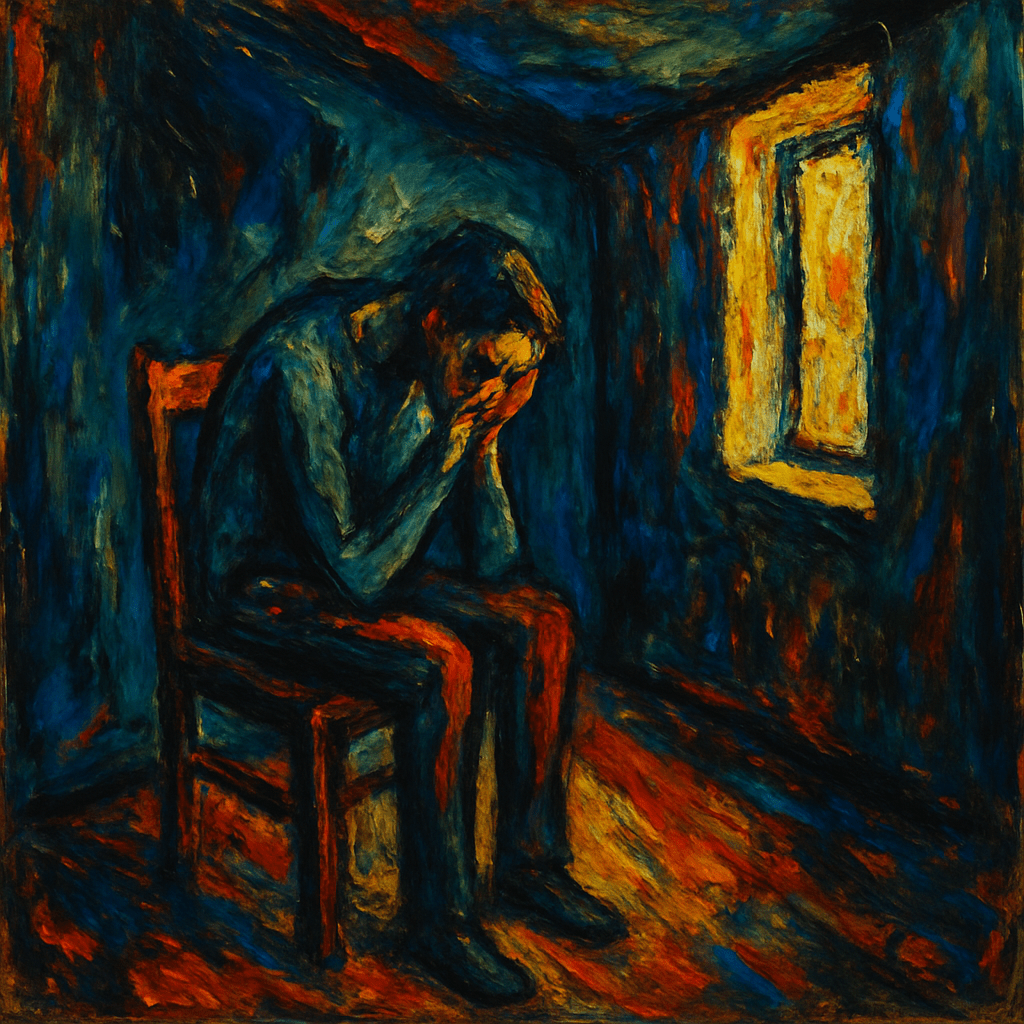
Psalm 106 is a psalm of remembrance and repentance, like an Easter vigil on Holy Saturday read alongside Psalm 105. It’s both a confessional history and a corporate plea for mercy. The psalm begins and ends with praise (vv. 1, 48), but the heart of the psalm is a litany of Israel’s forgetfulness, rebellion, and God’s enduring faithfulness despite their unfaithfulness. For the pastor, this psalm becomes a poignant call to those who’ve grown cold or distant from the Church. It’s a mirror of our own failings and yet a proclamation of the Gospel’s steadfast promise: “Nevertheless, He saved them for His name’s sake, that He might make His mighty power known” (v. 8).
Psalm 106 does not isolate the sins of a specific generation but gathers together the cumulative memory of the Church’s failures across time. This makes it especially powerful for calling the inactive member back. It says to them: You are not alone in your spiritual wandering. God’s people have always wandered, but God’s mercy endures longer than your absence. This psalm roots repentance not in private guilt but in shared confession, and it roots hope not in personal effort but in divine grace. The pastor, who ministers to both the faithful and the faltering, can find in Psalm 106 a scriptural pattern for speaking truth and grace to those who’ve drifted away.
The inactive member often carries complex emotions—shame, apathy, bitterness, fear. Some have been gone for so long they cannot imagine a way back. Others have been hurt by the Church, or slowly faded into spiritual inertia (and we must address those hurts). Psalm 106 speaks to these realities without excusing them. It names sin, yes—not to condemn, but to invite. The psalmist lifts his eyes in prayer: “Remember me, O LORD, with the favor You have toward Your people; oh, visit me with Your salvation” (v. 4). This prayer becomes the Church’s own invitation to the inactive: Let us remember together. Let us return together. Let us rejoice again in His salvation.
Psalm 106 serves not only as a doctrinal teaching but also as a pastoral compass. It traces the arc of redemptive history through the lives of the unfaithful and the mercy of the Faithful One. It reminds us that calling the inactive member back is not an act of judgement but an act of compassion—one grounded in the long memory of God’s people and the even longer memory of God’s covenant. Every effort to reach out to the lost sheep echoes the rhythm of this psalm: confession, intercession, remembrance, and praise. Through it, the Church learns how to speak again to her wandering children, not with threats or guilt but with the ancient cry: “Save us, O LORD our God, and gather us” (v. 47).
A Psalm of Generational Memory and Personal Reckoning
Psalm 106 begins by anchoring the reader in the unchanging goodness and mercy of the Lord: “Praise the LORD! Oh, give thanks to the LORD, for He is good! For His mercy endures forever” (v. 1). This is not sentimental optimism but the theological ground on which the rest of the psalm stands. The enduring mercy of God is the only explanation for Israel’s continued existence. The psalmist understands that without God’s covenantal mercy, the people would have been rightly swept away by their own rebellion—like feckless chaff in the wind (Psalm 1:4). This confession creates a gracious space where both individual and communal sins can be acknowledged without despair. For the inactive member, who may fear they’ve wandered too far, this verse opens the door: God’s mercy is longer than your absence.
Following this, the psalm quickly confesses, “We have sinned with our fathers, we have committed iniquity, we have done wickedly” (v. 6). Notice the we. The psalmist does not cast blame on distant ancestors but includes himself in the guilt of the community. This is our understanding of original sin and corporate guilt—we are all implicated, and we all stand in need of grace (Romans 3:23-26). The inactive member need not feel as though they alone have failed. The faithful in the pew and the pastor in the pulpit must also say, “We have sinned in thought, word, and deed.” The Church is not a museum for saints but a hospital for sinners. Psalm 106, therefore, becomes a scriptural beckoning for those who’ve lapsed: Come and confess with us. We all need the same mercy.

Psalm 106 then recounts Israel’s story of disobedience in detailed episodes—grumbling at the Red Sea (vv. 7-12), craving in the wilderness (vv. 13-15), envying Moses and Aaron (vv. 16-18), making the golden calf (vv. 19-23), refusing to enter the Promised Land (vv. 24-27), and mingling with pagan nations (vv. 34-39). It’s a litany of spiritual forgetfulness. This remembrance is done not for the sake of nostalgia but for repentance. The same forgetfulness that plagued Israel plagues the Church today. Inactive members often drift not out of malice but forgetfulness of the joy of God’s house, the peace of the Sacrament, and the fellowship of believers. Psalm 106 names this forgetting for what it is: sin. But by naming it, it also makes room for grace.
This generational memory is part of what the Church confesses every Sunday. We say at the beginning of the Divine Service, “We confess that we are by nature sinful and unclean… We have sinned against You in thought, word, and deed, by what we have done and by what we have left undone…” (LSB, p. 151). Psalm 106 gives texture and narrative to this corporate confession. It reminds the inactive member that their spiritual story is not alien to the Church but woven into her very fabric. Their struggle is not new; neither is it too shameful. God has dealt patiently with generations of forgetful children, and He will deal patiently with them, too. The psalm therefore functions as a gentle but urgent mirror, asking, “Do you see yourself here? Then come home.”
God’s Wrath and His Relenting Mercy
Psalm 106 does not shy away from the reality of divine wrath. “Therefore, the wrath of the LORD was kindled against His people, so that He abhorred His own inheritance” (v. 40). These words strike with chilling force. Sin is not a mere lapse of judgement or unfortunate habit; it is active rebellion against the holy God. The psalm teaches us to take sin seriously—not just the sins of the world but our own sins as well. For the inactive member, this may be a difficult truth. Absence from the Divine Service is not a neutral lifestyle; it’s a rupture of the relationship God desires with His people. But this wrath is not an end in itself—it is part of a larger narrative of mercy.
The purpose of God’s wrath in this psalm is to drive the people back to Him. When God “gave them into the hand o the Gentiles” (v. 41), it was not to destroy them but to awaken them (hence this psalm). Even God’s anger serves His saving purpose. He allows consequences so that hearts might be stirred to repentance and a deeper trust in His grace. As Luther put it, “God wounds to heal.” For the inactive member, this means any spiritual dryness or dissatisfaction they feel is not proof of God’s rejection but an invitation to return. The God who judges is also the God who restores. And the pastor can say with confidence, “If you feel empty, it may be because God is calling you back to be filled.”

Then comes the great hinge of the psalm: “Nevertheless, He regarded their affliction when He heard their cry; and for their sake He remembered His covenant and relented according to the multitude of His mercies” (vv. 44-45). This “nevertheless” is the Gospel in one word. After rebellion, forgetfulness, idolatry, and injustice, God still hears the cries of His people—not in passive apathy but in active listening. He still sees and remembers. He does not wait for perfection before showing mercy; He acts out of the abundance of His own promise. This verse, perhaps more than any other, is the message to the inactive member: God has not forgotten you, even if you’ve forgotten Him. “If we are faithless, He remains faithful; He cannot deny Himself” (2 Timothy 2:13). The promise of Baptism still stands. The doors of the Church are still open. Christ’s body and blood are still given “for you.”
Moreover, the Gospel in Psalm 106 is covenantal and sacrificial. The mercy shown is not arbitrary but rooted in God’s unchanging covenant, fulfilled in Christ. The pastor can point to the cross as the ultimate act of divine remembrance. “But God demonstrates His own love toward us in that while we were still sinners, Christ died for us” (Romans 5:8). The wrath Christ bore on the cross in our place secures the mercy offered in Psalm 106. Thus, returning to the Church is not about proving oneself worthy or joining the country club for imaginary social points; it’s about receiving what Christ has already done. The “nevertheless” of God is written in blood upon the cross and spoken afresh in every sermon, every baptism, and every Supper.
Return for the Sake of the Congregation
Psalm 106:4-5 expresses a deeply ecclesial longing: “Remember me, O LORD, with the favor You have toward Your people. Oh, visit me with Your salvation, that I may see the benefit of Your chosen ones, that I may rejoice in the gladness of Your nation, that I may glory with Your inheritance.” This is not the language of private spirituality but restoration to the community. In Babylonian exile, the psalmist yearns to be among God’s people again, to share in their blessings, and to participate in their joy. This verse becomes a vital encouragement for inactive members who may have become used to living their faith in isolation. Christianity is not meant to be lived alone. The inheritance of the saints is not given individually but shared in the gathered Body of Christ (cf. 1 Corinthians 12:12-31).

The word “church” in Greek is εκκλησία (ekklēsia), which is not merely a spiritual abstraction but a concrete assembly gathered around the Word and Sacraments. As we confess in the Book of Concord (note that concord means harmony), “The Church is the congregation of saints [Psalm 149:1] in which the Gospel is purely taught and the Sacraments are correctly administered. For the true unity of the Church it is enough to agree about the doctrine of the Gospel and the administration of the Sacraments” (AC VII, 1-2). In other words, the Church is invisibly where the Holy Spirit dwells in the hearts of believers and visibly where His people gather around His Word and Sacraments. This is not two but “one holy, catholic [universal], apostolic Church” (Nicene Creed).
To miss church is not just to miss a sermon; it is to miss Christ present in His gifts in the Means of Grace. The Lord’s Supper, around which the Divine Service centers, is not virtual or theoretical. It is real food for real sinners given in a real place. Psalm 106 therefore reminds us that faith is not just about belief but about belonging. The Christian life is both vertical (with God) and horizontal (with His people). To return to the Church is to rejoin the feast, to rejoice in the gladness of His nation, and to glory in the inheritance that is ours together.
This inheritance is not only spiritual but also corporeal (and corporal). Paul reminds us that “if one member suffers, all the members suffer with it” (1 Corinthians 12:26a). The absence of even one baptized believer leaves a hole in the tapestry of the Church’s life, which means, O inactive member, you matter to the Church. The pastor can therefore speak this truth gently but firmly to the inactive member: “You matter to us. We’re not the same without you.” This is not flattery but ecclesiology. Christ’s Body is not whole when parts are missing. An inactive member is like a missing arm, or a missing foot, or a missing eye (again, see 1 Corinthians 12:12-31). Just as the psalmist longed to share in the benefits of the community, the Church longs for the return of her members—not just for their sake, but to be made whole.
Moreover, this return is a visible witness to the power of grace. When an inactive member returns, it becomes a moment of rejoicing for the congregation, even the angels (Luke 15:10)—a tangible sign that the Gospel is at work, that Christ still gathers His sheep (John 10:27). The pastor may even share Psalm 106:47 in a reworded prayer with the inactive member: “Save us, O LORD our God, and gather us from among [our exile], to give thanks to Your holy name, to triumph in Your praise.” Every return is a small fulfillment of this prayer. Every restored member is a living testimony to the mercy of God who gathers, forgives, and restores.
Practical Ways to Use this Psalm in Pastoral Care

Use Psalm 106 in a home visit or letter. Print the psalm or write a personalized reflection. A handwritten letter will be more meaningful (you can print the psalm, as it’s too long to write by hand!). Speak honestly about your care for the person and how Psalm 106 reflects both our shared guilt and shared hope in Christ. Remind them that like Israel, they have a history with God, and God is not done writing it. I give you permission to use any words I’ve written here verbatim, or you may print it out for them and include in your letter, or bring it with you on your visit.
Preach it liturgically. Use Psalm 106 as your sermon text on an appropriate Sunday that emphasizes Confession & Absolution, especially when inviting inactive members for a special homecoming service or festival (e.g., Reformation, Easter, Advent, Christmas). Unfortunately, Psalm 106 doesn’t appear as a reading in either of our lectionaries, but it’s okay to break from the lectionary every once in a while to preach to the situation (and for some reason, it’s absent in the Lutheran Service Book, likely because of its longevity). Emphasize that the mercy of God endures through every generation, and so does His invitation to return.
Hold an Easter vigil on Holy Saturday and include Psalms 105 and 106 as two of the readings. You can even include Psalm 107 if you’re feeling ambitious. These readings offer a powerful retelling of salvation history that culminates in the triumph of Christ’s resurrection. Psalm 105 recounts the mighty acts of God—His covenant with Abraham, deliverance from Egypt, and provision in the wilderness—reminding the Church God is always faithful to His promises. Psalm 106, by contrast, confesses the repeated failures of God’s people and magnifies His mercy in relenting and restoring. Together, they form a liturgical dialogue of faithfulness, forgiveness, history, and hope. On Holy Saturday, as the Church stands between the darkness of the tomb and the dawn of the resurrection, these psalms help the faithful rehearse the story of redemption: God’s longsuffering love toward a rebellious people, now fully revealed in Christ crucified and risen. They prepare our hearts for the alleluia yet to come, assuring us the same God who delivered Israel from slavery to Egypt and exile in Babylon also delivers us from our slavery to sin and our exile from Him through the Lamb who was slain.
Now, inactive members are high unlikely to attend an Easter vigil, as it is notoriously an underpopulated service. But in preparation you can encourage your people beforehand to invite inactives (and the unchurched) to the vigil, as it’s not as anxiety-inducing (socially speaking) as a full Sunday service. You can also use this annual service as a great opportunity to preach to and for the dechurched, encouraging your people to reach out to them so that it’s not all on you.
Offer the Sacrament. Verse 4 pleads, “Remember me, O LORD, with the favor You have toward Your people.” That favor is tangibly given in the Sacrament of the Altar. If you visit an inactive member in their home and they’re hesitant to come to church, offer private Communion. Let them taste the mercy of Christ again. Let the body and blood of Jesus call them home.
A Shared History, A Shared Hope
Psalm 106 is not only ancient Israel’s story. It’s the story of every Christian who has ever wandered, every congregation that has ever failed, and every pastor who pleads for their flock to return. It’s a psalm of sin’s reality and God’s redemptive answer to it.
To the inactive member, it says: You are not forgotten. God remembers His covenant. The Church still rejoices in your name. Return with us to the Lord, whose mercy endures forever.
To the pastor, it gives a pattern of honesty, hope, and faithful calling. Use it, pray it, preach it, and trust that the Lord who heard Israel’s cry hears even yours in exile.
 The Lutheran Column