
Do you not know that you are the temple of God and that the Spirit of God dwells in you? — 1 Corinthians 3:16
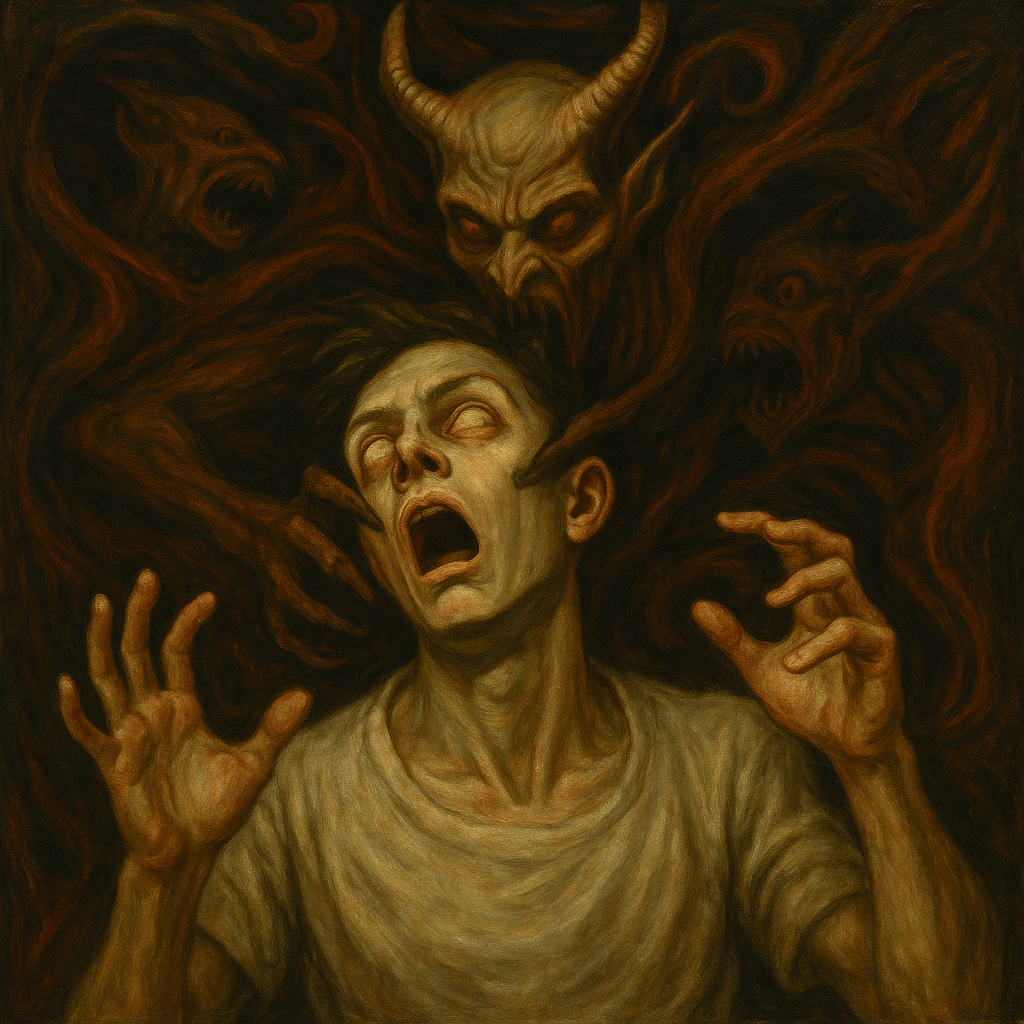
From the world’s perspective, possession evokes horror—an unclean spirit violating a person’s will, subverting their personality, tormenting body and soul. But Scripture speaks of a different kind of possession—not demonic but divine, not destructive but life-giving. The true ghost possession is Holy Ghost possession—when the Holy Spirit claims, indwells, and sanctifies the believer. And unlike the terrifying caricatures of demonic possession, this possession is peaceful, purifying, and deeply personal. Whereas the world shudders at a spirit invading the body, the Church rejoices that the Spirit of the living God makes His dwelling in us.
This indwelling is not abstract or symbolic. It is real, sacramental, and incarnational. The Holy Spirit is not a metaphorical “good feeling,” “vibe,” or vague inspiration; He is the third Person of the Holy Trinity, proceeding from the Father and the Son, “who with the Father and the Son together is worshiped and glorified,” who comes to dwell in the bodies and souls of believers. The Scriptures do not speak of the Holy Spirit as a distant force but as the divine Companion (Comforter/Helper) of the Church—the Paraclete (John 15:26). Just as God walked with Adam in the garden and Christ dwelt bodily among us, so the Holy Spirit makes His home in us—not merely beside us, not merely over us, but within us. His presence is the true consolation of the Christian life.
In Holy Baptism, the Spirit is given in fullness. Peter’s sermon at Pentecost ties forgiveness and the Spirit together: “Repent, and let every one of you be baptized in the name of Jesus Christ for the remission of sins; and you shall receive the gift of the Holy Spirit. For the promise is for you and to your children, and to are who are afar off, as many as the Lord our God will call” (Acts 2:38-39). The baptismal waters are not bare signs but the means through which God bestows His Spirit. Answering the question, “What is Baptism,” Luther answers in the Small Catechism, “Baptism is not just plain water, but it is the water included in God’s command and combined with God’s Word.” The benefits Baptism gives are “forgiveness of sins, rescues from death and the devil, and gives eternal salvation to all who believe this, as the words and promises of God declare.”
The font thus becomes a portal through which Heaven invades Earth, the old Adam is drowned, and a new creation is born—not figuratively, but in truth. This is the beginning of divine possession—not to enslave but to liberate from sin (see Romans 6).
Possession Without Coercion: The Spirit Does Not Violate but Enlivens
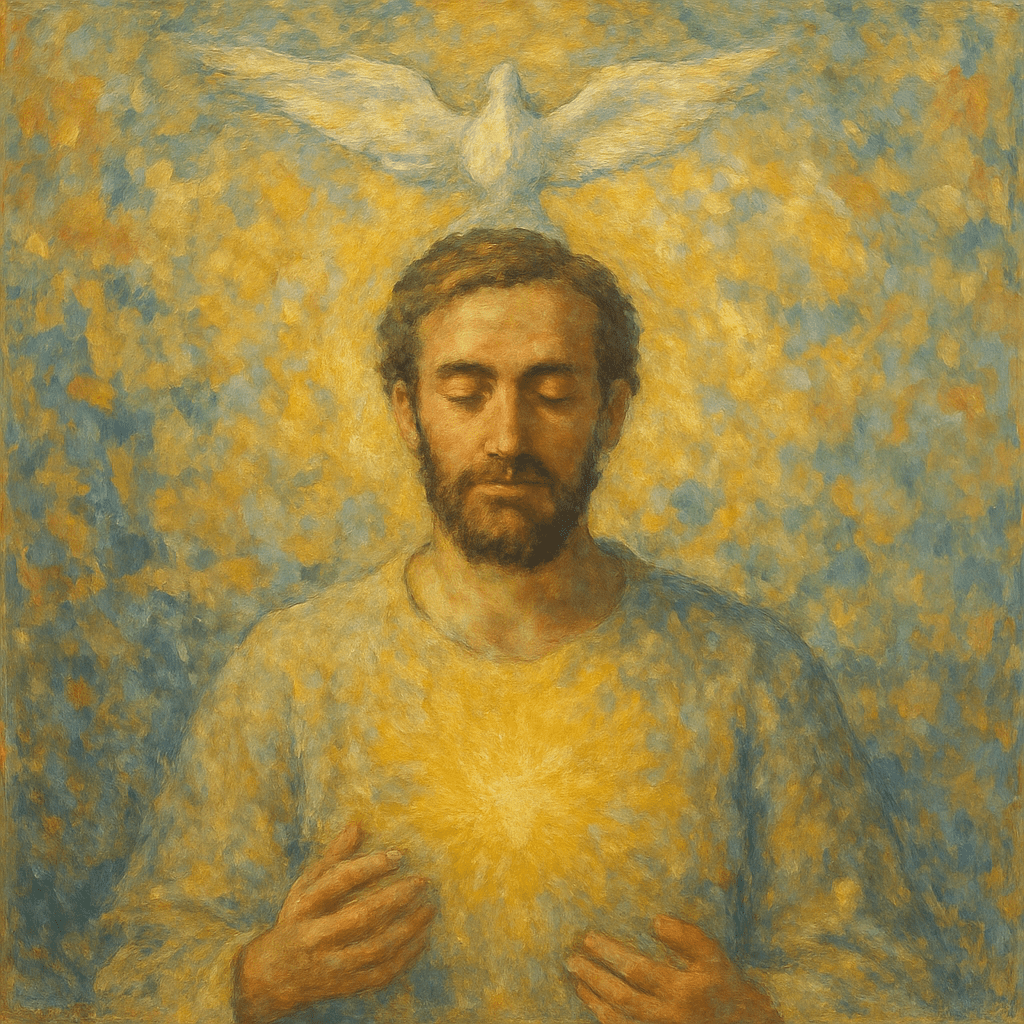
Unlike unclean spirits (demons) that override the will, the Holy Spirit liberates it. This is not spiritual mind control but spiritual rebirth. “Now the Lord is the Spirit; and where the Spirit of the Lord is, there is liberty” (2 Corinthians 3:17). He also regenerates the soul: “But when the kindness and the love of God our Savior toward man appeared, not by works of righteousness which we have done, but according to His mercy He saved us, through the washing of regeneration and renewing of the Holy Spirit, whom He poured out on us abundantly through Jesus Christ our Savior, that having been justified by His grace we should become heirs according to the hope of eternal life” (Titus 3:4-7). Baptism is a holy adoption into God’s family.
The Holy Spirit doesn’t destroy individuality; He resurrects it. He does not possess the Christian in terror but in tenderness—like a best friend coming to help and comfort His friend, like fire that warms rather than consumes. In this holy possession, you are not dehumanized but made truly human. The Spirit does not flatten your personality into conformity but purifies it for its proper end: union with Christ.
This is why the Christian retains full personhood and responsibility. The Holy Spirit does not drive us like cattle or manipulate us like puppets; He enlivens our will so that we may gladly love God and serve our neighbor. In demonic possession, the self is silenced; in Holy Ghost possession, the self is restored. The Spirit heals the conscience and saves the soul (1 Peter 3:21), strengthens the heart, enlightens the mind, and kindles holy desire. What sin twisted, He untwists. What death claimed, He revives. And what fear shattered, He mends. The possessed Christian walks in freedom from sin, no longer bound to it as a slave.
As Luther says, “The Holy Spirit is no tyrant. He governs us sweetly, as one that is both our Comforter and Helper” (LW 27:15). The Greek title for the Spirit in John 15:26, Paracletos (παράκλητος), means one who comes alongside to aid. He is no invader but a Helper. Not an abuser, but an Advocate. He speaks not in uninterpreted tongues but in Scripture. He stirs not chaos but calm conviction. He points you not to despair or anything else but always to Christ—they are joined at the hip. What the world mocks as folly, the Church confesses as wisdom. And this wisdom is Christ crucified, applied by the Spirit in the deepest recesses of the believer’s soul (1 Corinthians 1:18-25).
What Does This Look Like in Our Lives?
So, what does this holy possession look like in daily life? It doesn’t look like speaking in ecstatic tongues, levitating, or being overwhelmed by emotional zeal that you pass out. Rather, it looks like the quiet fruit of the Spirit: “love, joy, peace, longsuffering, kindness, goodness, faithfulness, gentleness, [and] self-control” (Galatians 5:22-23). These are not spectacular signs but stable patterns. It’s not the extraordinary but the ordinary transformed. The Spirit’s work is often unseen precisely because He so thoroughly transforms the ordinary—ordinary water, ordinary words, ordinary bread and wine, ordinary vocations. The possessed Christian may be unnoticed by the world, but he is known intimately by God.
This indwelling expresses itself in vocations. When a father teaches his children the Catechism, the Spirit is working. When a nurse comforts the dying, the Spirit is working. When a lonely widow lights her candle and prays the Lord’s Prayer, the Spirit is working. He does not bypass our humanity but enters it, just as Christ Himself did in His incarnation. He therefore does not lead us away from this world but into it with sanctified hearts and faithful hands. The truly Spirit-filled Christian is not the one who floats above others in ecstasy but the one who stoops to serve, forgives with tenderness, and endures in hope. The Holy Spirit is very quiet in Scripture, so it is no accident He shows Himself not in loud ecstasy but in quiet faithfulness.
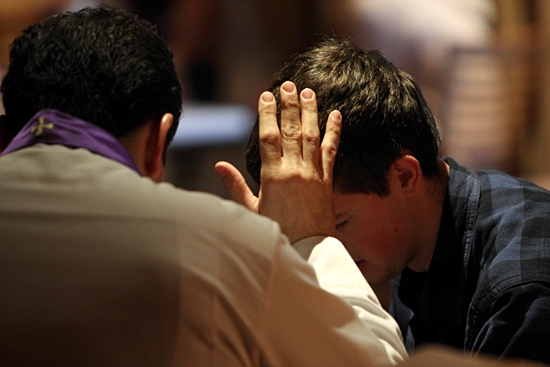
Furthermore, we see the Holy Spirit’s work most clearly in the rhythm of Confession & Absolution. Absolution is the outward spoken Word of God’s forgiveness. As Luther writes, “God grants His Spirit or grace to no one except through or with the preceding outward Word [Galatians 3:2, 5]… Whatever is praised as from the Spirit—without the Word and Sacraments—is the devil himself” (SA III, VIII, 3, 10). The sacrament of Absolution is the Spirit’s possession made visible: daily crucifying the flesh, which is daily raising the new man in baptism (which Luther calls the sacrament of repentance—see LC IV, 65, 74).
Every act of repentance, every return to the Gospel, and every Amen spoken at the Supper are the real manifestations of the Spirit’s presence. The world may not recognize them—indeed, many churches may not—but the true Church on Earth rejoices in them: “The Church is the congregation of saints [Psalm 149:1] in which the Gospel is purely taught and the Sacraments are correctly administered” (AC VII, 1). This is the ghost story we live in: not one of fear, but of faith.
Possessed to be Free
To be possessed by the Holy Ghost is not a terror but a comfort—indeed, a help. It is to be truly free because we are finally no longer our own—we are Christ’s. As Paul says, “It is no longer I who live, but Christ who lives in me” (Galatians 2:20). And how does Jesus dwell in us? By the Spirit whom He sent after His ascension (see Luke 24:44-53 and Acts 1:1-11; 2:1-4). This is not slavery to an external law but participation in the life of Christ Himself—a paradoxical, free slavery to His righteousness (Romans 6:15-23). This possession does not crush the soul but lifts it heavenward. It’s the reversal of Eden, the undoing of Babel, and the restoration of Pentecost. God has made His home with man.
This truth is deeply pastoral. In moments of despair—when you feeling nothing—believe this: the Holy Spirit is still there. If you ever worry you’ve committed the unforgivable sin of blaspheming the Holy Spirit (Matthew 12:31-32), know for certain that you have not, for one who has blasphemed Him would not be so worried about it. Such anxiety is evidence of His presence in you, for the more we live in the Spirit, the more sensitive we become to our sin.
In times of doubt and when your prayers become dry, remember He intercedes for you when your groaning is too deep for words (Romans 8:26). When you’re tempted to think God has left you, know that the very longing for God is itself the Spirit crying within you, “Abba, Father” (Romans 8:15). You may not feel possessed, but you are. Not by a spirit of fear or emotional highs, but by the Spirit of sonship. Not by guilt but by grace. Not by darkness but by the marvelous Light of Christ (1 Peter 2:9). The Holy Ghost’s possession depends, thankfully, not on our meager feelings but on the efficacy of God’s Word (Isaiah 55:10-11).
This is the true ghost story the Church tells. Not a tale of hauntings but of holy habitation. Not of being taken over in terror but being taken in by God’s love. This possession does not isolate but incorporates you into a body—the Body of Christ, the communion of saints (1 Corinthians 12:12-31). He drives you not to madness but to mercy. The Holy Ghost possesses you not to make you something less than human but to make you truly alive.
 The Lutheran Column