
In Dawnshard, Brandon Sanderson offers a brief yet profound meditation on identity, limitation, and strength. This novella—set between the third and fourth books, Oathbringer and Rhythm of War respectively, in The Stormlight Archive—contains fewer pages than the main volumes, but more than earns its place within the epic. It’s not a story of grand armies or ancient wars. Instead, it’s a story about a woman with a disability who has to confront her fears, doubts, and her own body’s limitations in an unaccommodating world.
For Christians—especially those formed by the Lutheran theology of the cross—Dawnshard is a vital read. It explores the tension between creaturely weakness and calling. It portrays disability not as a curse to be overcome but as part of one’s vocation.
This is your spoiler warning.
Rysn: Bearing the Body’s Limits without Shame
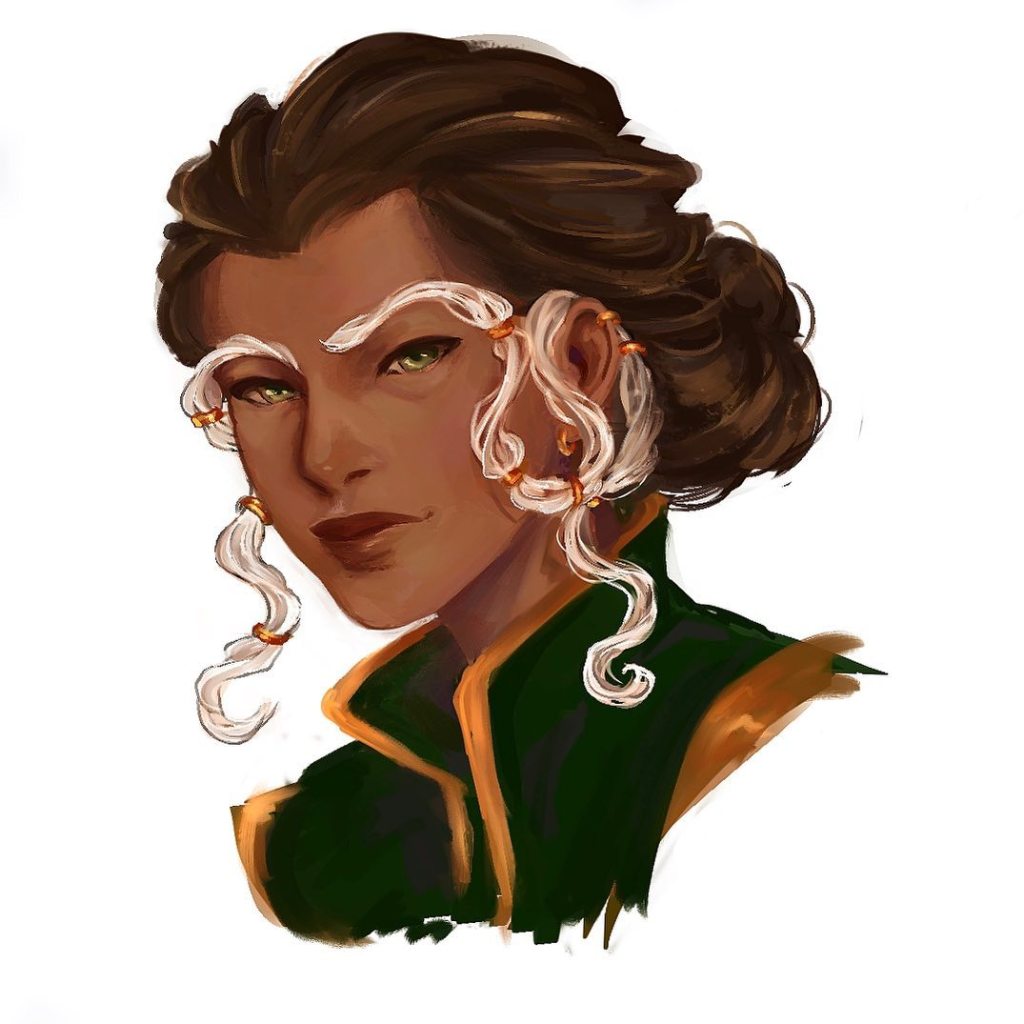
Rysn Ftori—a minor character in the series—is a young merchant who, following a terrible accident in Oathbringer, has become paraplegic. She’s the primary protagonist of Dawnshard. While most fantasy protagonists gain strength, speed, or magical gifts, Rysn gains a wheelchair, limited mobility, and public condescension. Yet Sanderson never lets her be pitied. Instead, she is competent, clever, and deeply human. Her disability is not erased—it is part of her sanctified struggle.
Rysn reflects, “Being disabled didn’t mean being broken. It meant being different. And everyone was different in some way.” This is not a platitude; it’s a confession of identity. She’s not ashamed of her body. And in this, she echoes St. Paul, who teaches: “The members of the body which seem to be weaker are necessary” (1 Corinthians 12:22). Lutheran theology affirms this bodily dignity. The body, even when impaired by injury, illness, or disorder, remains part of God’s good creation and is destined for resurrection.
Rysn’s thoughts here spoke to me personally. She’s had to learn how to self-advocate in a world not built to accommodate for her. As an autistic person, I was forced to resign from my first congregation because the elders refused to make accommodations for my neurodevelopmental disorder. I’m also physically disabled from an injury in the Army, and even though we have the Americans with Disabilities Act, the world is still not built to accommodate for disabled people. Companies can get away with not granting you an interview or hiring you because under their job requirements, they list, “Must be able to lift over 40 pounds” or “Must be able to be on feet for long periods of time,” which is extremely difficult for my disability and others. My forced resignation hit me the hardest, and like Rysn, I’ve had to learn that my autism doesn’t mean I’m broken. It just means I’m different—neurodivergent. And because the world struggles to accommodate for autists like me, I’ve had to learn how to self-advocate.
In the Small Catechism, we confess about the First Article of the Creed: “I believe that God has made me and all creatures; that He has given me my body and soul, eyes, ears, and all my members, my reason and all my senses, and still takes care of them…” These gifts are not contingent on perfection. Even when they fail, they are still given and honored. Rysn lives this truth—not passively, but with fierce realism.
The Temptation of Healing and the Sanctity of Scars
Perhaps the most theologically resonant scene in Dawnshard is when Rysn comes into contact with ancient power—the titular Dawnshard. Sanderson could have written it so that she’s miraculously healed. In fact, I was expecting it. But she still remains disabled, and I’m glad he wrote it this way. If Sanderson had written it so that she was suddenly healed, it would’ve cheapened her entire experience. As Rysn reflects, “Sometimes you need to accept what you’ve lost, then move forward. Then you can instead realize what you’ve gained.”
This is not masochism, but vocation. In writing the story this way, Sanderson chose not to erase her past because her suffering has shaped her. Her injury is not her identity, but it is part of her calling. As St. Paul writes, “I will rather boast in my infirmities, that the power of Christ may rest upon me” (2 Corinthians 12:9).
Luther affirms this paradox, “It is certain that man must utterly despair of his own ability before he is prepared to receive the grace of Christ” (LW 31:40). Rysn does not chase glory. She does not beg for wholeness. Instead, she accepts grace as it comes—and it comes not to erase her pain, but to dwell within it.
The Christian confession of resurrection does not deny our scars—it transfigures them. Christ rose with the marks still in His hands, feet, and side (John 20:27). Our own bodily or mental wounds will not be erased in shame, but glorified in Christ. God does not need to erase your past in order to use your future.
The Weight of Command: Authority in Weakness
Rysn’s physical limitations create unique complications for leadership. As captain of the ship Wandersail, she must rely on others. She cannot run, climb, or fight. But still, she commands, and she commands well. This challenges the myth of the “strong leader” so often idolized in secular and ecclesial culture. In Dawnshard, leadership flows from wisdom, presence, and trust, not brute strength. Rysn is frequently underestimated by others, but never by those who know her best.
This reflects a biblical pattern. God chooses Moses, slow of speech (Exodus 4:10); Paul, weak in appearance (2 Corinthians 10:10); and the crucified Christ, “despised and rejected by men” (Isaiah 53:3; cf. 1 Corinthians 1:21-25). Power in the Church is never self-generated; it is cruciform—shaped by service, marked by scars.
Rysn says at one point, “I don’t want to be pitied. I want to be listened to.” This could be the cry of every marginalized voice in the Church. Pity offers distance, but love listens.
The Dawnshard and the Burden of Power
At the climax of the story, Rysn becomes the new bearer of the Dawnshard—one of the four primal Commands that shaped the universe. She carries the Command of Change. This ancient force does not transform her body—it transforms her responsibility. “I contain a god’s command,” she says, “but I’m still me. Still Rysn. I still can’t walk. I still can’t fly. I still have a ship to run.”
This is the Gospel. The Christian bears the name of Christ in Baptism. We are indwelled by the Holy Spirit. Yet we remain ourselves—sinful, scarred, and limited. Grace does not erase the self—it redeems it. As we confess in the Small Catechism, Baptism “is not just water, but the Word of God in and with the water does these things, along with the faith which trusts this Word of God in the water.” The water remains ordinary, but the Word of God gives it divine power for salvation (1 Peter 3:21).
So, too, with Rysn. She remains who she is, but now she bears something cosmic. She’s entrusted with a truth she cannot yet understand—and yet she carries it faithfully. This is the life of faith. We do not know the end, but we are chosen to bear Christ into a world that forgets Him and a world that ostracizes the disabled.
Disability as Vocation, Not Unfit
Perhaps most importantly, Dawnshard never makes Rysn’s disability the “problem” to be solved. Neither does it ignore it. It lives in the tension. Rysn’s body is not a theological test—it is her life. She is a disabled woman called to command ships, to bear responsibility, and to shape the future. And the story never asks her to become someone else.
This is what the Church must learn. Instead of learning to accept who I am as an autistic person, the elders at my first congregation were forcing me to be somebody else. When I eventually refused as I began working on my mental health, they forced me to resign.
Disability is not merely to be pitied or healed—it is to be honored. It is part of that person’s vocation, and it is part of the Church’s body. As cited earlier from Paul, the weak members are necessary in the Body of Christ. When we force them to leave the Church—pastor or member—we cease to be the Church and become a tyrant instead. The elders were not elders, but CEOs who measured my worth not by the image of God, but by my ability to be socially proficient.
“Still Rysn. Still Me.”
Dawnshard is more than a bridge novella; it is a profound theological parable of vocation, weakness, and grace. Rysn is not healed, and she is not heroic in the traditional sense. But she is faithful. She does not reject power, but neither does she exploit it. She receives it with trembling and walks (or wheels) forward with courage. For Christians—especially those ministering among the disabled, the chronically ill, or the overlooked—Rysn’s story is a reminder that Christ’s strength is made perfect in weakness (2 Corinthians 12:9)—a story I myself hope to emulate as I move forward. That weakness does not make one unfit—it is the place where grace takes root.
So, although it’s not a required reading of the series, I encourage you to read Dawnshard if you choose to embark on the journey of The Stormlight Archive. Not just for more well-rounded character development, but to remember that those with wheelchairs—in body or mind—may yet carry the commands of God. And in Christ, even the ones who cannot walk may yet run the race set before them, for Jesus is the finisher of our faith (Hebrews 12:1-2).
 The Lutheran Column