
But Jesus answered them, saying, “The hour has come that the Son of Man should be glorified. Most assuredly, I say to you, unless a grain of wheat falls into the ground and dies, it remains alone; but if it dies, it produces much grain. He who loves his life will lose it, and he who hates his life in this world will keep it for eternal life. If anyone serves Me, let him follow Me; and where I am, there My servant will be also. If anyone serves Me, him My Father will honor. Now My soul is troubled, and what shall I say? ‘Father, save Me from this hour’? But for this purpose I came to this hour. Father, glorify Your name.”
John 12:23-28
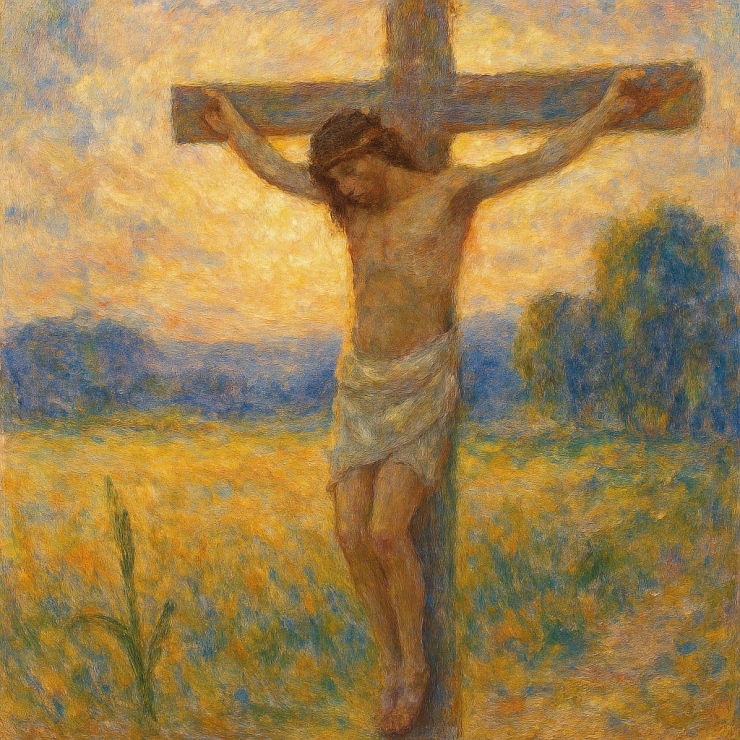
The hour has come. Not an hour of triumph by earthly standards, but of glory revealed in suffering and majesty veiled beneath the weight of the cross. The voice of Jesus cuts through the layers of worldly comfort and clings to something deeper—something eternal. “He who loves his life will lose it,” He says (v. 25a), and the words sting, jarring us from the lull of self-preservation. But He is not cruel. He is not cold. He speaks as the grain of wheat that falls into the earth, not to rot in meaninglessness, but to rise again bearing much fruit.
So, what does this harsh-sounding truth mean? “He who hates his life in this world will keep it for eternal life” (v. 25b). Is Jesus advocating for despair—for the hollow ache of depression, the cold shadows that wrap around the soul in sadness?
No. He speaks not from the despair of the tomb, but from the doorway of resurrection. He does not command the death wish of hopelessness; He beckons us beyond the clinging grasp of a world that cannot keep its promises. He is not glorifying self-loathing, but crucifying self-idolatry.
To love one’s life in the way Jesus warns against is to clutch it with clenched fists—as though it were ours to preserve, control, and define apart from God. It is to make our pleasures, comforts, and ambitions the center of all things. It is the love of life that fears loss of these pleasures more than sin, that avoids sacrifice more than death. It is to adore the mirror of sin more than the cross. But such love is a delusion, for the life we try to preserve on our own terms is already slipping through our fingers like sand.
To “hate” our life in this world, then, is not a call to psychological self-harm, but a holy renunciation—a breaking of the chains that bind us to this world’s false loves. It is the deep sorrow of repentance and the deeper joy of trust. It is to look upon our lives with the soberness of Gethsemane, saying, “Not my will, but Yours be done.” It is to die with Christ, not in despair, but in faith.
Jesus does not shun life—He is the Life (John 1:4; 14:6). But He knows true life can only be found beyond the grave. This is why He speaks of His hour—not the hour of applause or political victory, but the hour of crucifixion. “Unless a grain of wheat falls into the ground and dies, it remains alone,” He says (v. 24). The seed clutched in safety remains a seed. But buried, broken, and hidden in the earth, it becomes something more. So it is with Christ, and so it is with you.
We are not told to hate the life God has given us as if it were evil in itself. We are told to hate the life in this world—that is, life twisted by sin, centered on the self, estranged from God. Depression is not the same as this holy hating. Depression is the fog that settles over the soul when meaning seems lost. But Jesus speaks with fire and clarity. He calls you into meaning—not away from life, but through death into life. He calls you to let go of the life that ends so that you may receive the life that never does.
And where do we see this most clearly? In Jesus. In the Son of Man troubled in soul, but unwavering in mission. “Now My soul is troubled,” He says (v. 27). But He does not flee the hour. He does not shrink from the road. He does not cling to His divine life or recoil from the wounds that await Him. Instead, He says, “Father, glorify Your name” (v. 28). In His dying, He reveals the shape of our living—one that is cruciform.
Christ’s words are not meant to drive you into despair, but into Him. To crucify your old self with Him and rise anew (Romans 6:3-6). To shed the skin of self-interest and step into the robes of sonship. To die to sin and live to righteousness (Romans 6:7-14). This is not a command to hate as the world hates—with bitterness and disgust—but a calling to love rightly, which is to love Christ more than the self, to love the Giver more than the gift.
So, do not mistake the call of Christ for cruelty. His call is a kindness. He does not shame you for your sorrow, but invites you to lay it down. He does not mock the depression that weighs on your chest, but bears it on His back. He does not ask you to loathe your existence, but to lose your self-centered grip on it, that you may live by grace through faith. He died to draw you out of your darkness, to plant you like a seed in hope, and to raise you with Himself in glory.
To hate your life in this world is not to despair of its worth, but to surrender its throne. It is to let Christ take His place as King in your heart. And where He reigns, death cannot. Where He rules, sorrow finds its balm.
Do not fear the death He calls you to. It is not the end—it is the soil. And what springs from it is the life of Christ in you. So, fall—and rise. Die—and live. Lose your life, and find it forever safe in the One who lost His life to give you eternal life.
 The Lutheran Column
1 thought on “The Grain Falls, and Life Rises”