

Why am I worthless?
You’re not.
This question bears similarities with the first covered in this series, “What is my purpose,” but it is distinct. Just like this first question, we can say there is both a wide and a narrow sense of one’s worth, which also have to do with one’s relationship to God and neighbor.
The Wide Sense of Your Intrinsic Worth
First, in keeping with the Lutheran emphasis on extra nos (outside of us), our worth comes from God, which then informs our intrinsic worth. In the First Article of the Creed, we believe that God “has given me my body and soul, eyes, ears, and all my members, my reason and all my senses, and still takes care of them,” and so on. Again, this is a reminder that you are created in God’s image—that you are a rational creature and, as a baptized child of God, original righteousness has been restored to you. The image of God is why we talk about “the sanctity of life.” Because you are human, created in God’s image, you have immediate worth and value.
This is how we further know that being created in God’s image gives us intrinsic value: “Whoever sheds man’s blood, by man his blood shall be shed; for in the image of God He made man” (Genesis 9:6). Human life is so valuable to God that if a person is murdered, the just retribution for that life is the murderer’s own life. Ergo, if someone were to take your life, you are worth so much to God that the just payment for your life would be that murderer’s life. You might not feel like you’re worth that much, but to God you are. You do not need to feel your worth in order for your worth to be validated and true. A diamond does not feel worth or value, but it is still manifestly valuable. So are you.

Furthermore, we are all murderers, Adam being the first, for “through one man sin entered the world, and death through sin, and thus death spread to all men, because all sinned” (Romans 5:12). Whether literally or figuratively (i.e., hatred), we kill one another, and so we all pay the just payment for our murder: death. But through Jesus Christ, you now receive life. “Therefore, as through one man’s offense judgement came to all men, resulting in condemnation, even so through one Man’s righteous act the free gift came to all men, resulting in justification of life. For as by one man’s disobedience many were made sinners, so also by one Man’s obedience many will be made righteous… For the wages of sin is death, but the gif of God is eternal life in Christ Jesus our Lord” (Romans 5:18-19; 6:23).
And this brings us to the Second Article of the Creed, that we believe Christ “has redeemed me, a lost and condemned person, purchased and won me from all sins, from death, and from the power of the devil.” On the cross, Christ paid the price for your murder (all your sins), even self-murder (self-hatred). You feel worthless because of self-loathing, but Christ died for that spiritual suicide. Why? “That I may be His own.” You belong to Christ, and that gives you infinite worth and value.
Think of something that belongs to you—something you’ve placed significant sentimental value on, and it would deeply trouble you if you were to lose it. I used to have a Sonic the Hedgehog plushie since I was 4-years-old; it was a Christmas present in 1994. But during a move when I was 31, both he and the box he was in got lost, and I never recovered him. I truly loved this item, and it still deeply saddens me that I’ll never see it again.
Likewise, you belong to God now. All analogies break down eventually, for you are not a thing; you are a person. You are more than just sentimental value to God—a toy that brings up happy memories every now and then. Rather, you are a son, a daughter. A father places tremendous value on his children; he would literally die for them. This is the Father’s love for you, except He can’t die, because He’s God. So, He made a greater sacrifice: He sent His only-begotten Son, who is also God, to become human and die for you, that you may be His own—that you may be adopted as His child, a co-heir with Christ (Romans 8:17).
And now, this brings us to the Third Article, and furthermore, Baptism. In this article, we believe the Holy Spirit “has called me by the Gospel, enlightened me with His gifts, sanctified, and kept me in the true faith.” The Holy Spirit begins His work first by drawing you to Christ through His Word, which then brings you to Baptism wherein He enlightens you, sanctifies you, and keeps you in the true faith. You don’t just belong to God now, but also a family. As the Catechism puts it, “In the same way He calls, gathers, enlightens, and sanctifies the whole Christian Church on Earth, and keeps it with Jesus Christ in the one true faith. In this Christian Church He daily and richly forgives all my sins and the sins of all believers.”
Again, this occurs in Baptism, in which you receive the gift of the Holy Spirit (Acts 2:38), and you are baptized in the Church. You are part of an enormous family now: the family of God. Think of an orphan who has been alone for so long—no family, nobody to show him or her how immensely they are worth. Then they receive news that they are being adopted into a family, and the only thing they can do to respond is cry with joy and be embraced by warm hugs. I have cousins who were adopted, and we threw parties for them.
An even grander thing occurred when you were baptized. In Baptism, you receive the gift of the Holy Spirit—God’s own Spirit, which is like being wrapped in the bosom of the Father. And the angels themselves rejoiced (Luke 15:7, 10). You were an orphan, wandering through the muck and grime of the streets of sin, and the Father took you into His own home—His Church—and washed you, and made you His. As the Small Catechism quotes Titus 3:5-8 in the section on Baptism, “through the washing of regeneration and renewing of the Holy Spirit, whom He poured out on us abundantly through Jesus Christ our Savior, that having been justified by His grace we should become heirs according to the hope of eternal life. This is a faithful saying…”
The Narrow Sense of Your Intrinsic Worth
Being part of God’s family now, this also means you belong to the Church—to other Christians. As Paul says, “so we, being many, are one body in Christ, and individually members of one another” (Romans 12:5). And this brings us to one’s narrow sense of worth, which is also extra nos and shapes our intrinsic worth. As with the first question, this worth is given to you in the second table of the Ten Commandments (4-10), which helps us identify the various vocations God gives us. Let’s break these down in slightly more detail, which I purposefully neglected when dealing with the first question of purpose.
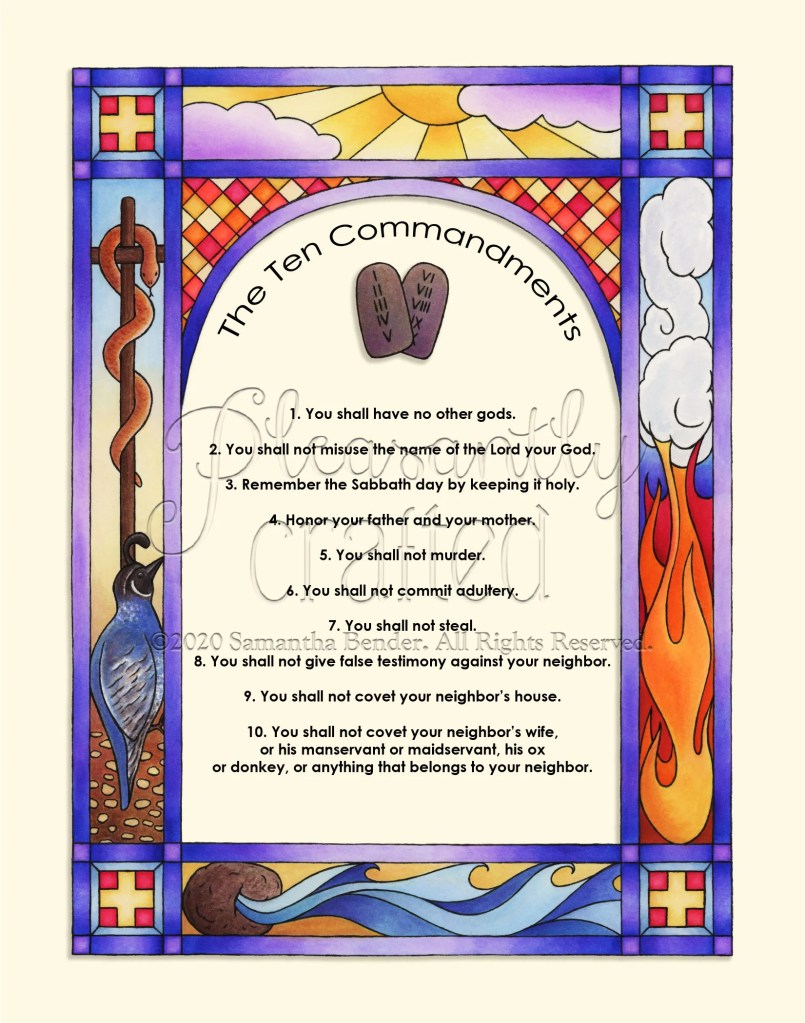
“Honor your father and your mother. What does this mean? Answer: We should fear and love God so that we do not despise or anger our parents and other authorities, but honor them, serve and obey them, love and cherish them.” The first vocation God gives you is son or daughter. As they show you your intrinsic worth by cherishing and nourishing you, you reciprocate this with honoring, serving, obeying, loving, and cherishing them. This doesn’t stop being a commandment when you get older and move out; they are still worthy of your honor, service, obedience, love, and cherishing. This commandment simply looks different as you age. Obeying your parents as a 10-year-old looks much different than obeying them as a 40-year-old.
Whenever I teach the Commandments to both children and adults, they always like to come up with “What if” questions, for we love trying to find loopholes in which we can violate God’s Law (just ask the lawyer who asked Jesus who his neighbor is!). For example, “What if a child is abused by their parents?” This isn’t the space to enumerate the issue, but I will simply say: In this case, they cease being a parent and instead become a devil.
Honoring your parents gives you worth because whereas the rest of the world champions rebellion against them, you show yourself to be better by exemplifying the intrinsic worth of your parents, created in God’s image just as you are.
“You shall not murder. What does this mean? Answer: We should fear and love God so that we do not hurt or harm our neighbor in his body, but help and support him in every physical need.” Remember, hatred is counted as murder (Matthew 5:21-22; 1 John 3:15). This can look like bullying, emotional abuse, throwing thoughtless invectives at someone because they have different political opinions than you do, and so on. Murder also includes, of course, the unjust taking of a person’s life, even when taking the law into your own hands when the justice system fails.
It also includes abortion. When a woman gets an abortion, she doesn’t cease being a mother; she becomes instead the mother of a dead child. Instead, we help and support a person in every physical need—uplift them with our words, take advantage of the law to help an abused or killed person, bring the baby to term (and set them up for adoption if deemed necessary), and so forth.
Not murdering, whether literally or figuratively, gives you worth because whereas the world normalizes the hatred of those who are different than you and those who threaten your autonomy, you stand out as better because you place their inherent value over your ego.

“You shall not commit adultery. What does this mean? Answer: We should fear and love God so that we lead a sexually pure and decent life in what we say and do, and husband and wife love and honor each other.” As a married person, exclusivity to your spouse shows their intrinsic worth. They are so valuable that you give yourself only to them. Sexually giving yourself to others is to be common and obscene. Giving yourself only to your spouse is to be a rare jewel, pure and clean. This is what chastity looks like in marriage.
“What if I’m single?” Again, we seek a loophole to violate God’s Law, which is why Jesus said, “You have heard that it was said to those of old, ‘You shall not commit adultery.’ But I say to you that whoever looks at a woman to lust for her has already committed adultery with her in his heart” (Matthew 5:27-28). Looking at another person lustfully is the same as committing adultery. So, if you are single, you will not undress a person with your eyes, masturbate to them, have premarital sex with them, or enjoy pornography. This is what chastity looks like in singleness.
Being chaste gives you worth because whereas the world treats marriage like a work contract and to toss that person aside if you’re “not a good match,” you are better by remaining loyal and faithful even through inevitable hardships; and whereas the world continues to objectify both men and women in impossible standards of beauty, pornography, and OnlyFans, you are better by refusing to see other people as sexual objects to be exploited for your personal pleasure.
“You shall not steal. What does this mean? Answer: We should fear and love God so that we do not take our neighbor’s money or possessions, or get them in any dishonest way, but help him to improve and protect his possessions and income.” The meaning of this commandment is obvious, but it also includes gaining money or possessions in a dishonest way, which we don’t often think about, such as manipulating loopholes in the law to take what you think is “rightfully yours.” While loopholes are technically legal, they are nevertheless dishonest, for we feign innocence to satiate our greed. Not stealing gives you worth because the world will utilize situation ethics to justify stealing, whereas you are better in that you ensure a person receives honest wages.
“You shall not give false testimony against your neighbor. What does this mean? Answer: We should fear and love God so that we do not tell lies about our neighbor, betray him, slander him, or hurt his reputation, but defend him, speak well of him, and explain everything in the kindest way.” We love breaking this commandment not just in person but especially on the internet, and especially when someone has different political or religious beliefs than we do. We will slander them, gossip about them, and formulate lies about them to damage their reputation. Not lying about your neighbor gives you worth because whereas most people will justify their gossip and slander because of their pride, instead you defend their reputation, speak well of them, and put the best construction on their situation and character.

“You shall not covet your neighbor’s house. What does this mean? Answer: We should fear and love God so that we do not scheme to get our neighbor’s inheritance or house, or get it in a way which only appears right, but help and be of service to him in keeping it.” Both this and the next commandment are similar to the seventh, which has to do with stealing. Having a big house is not a very important thing in life. (I myself find big houses unappealing. Too many rooms, too much cleaning, and high property taxes!) Not coveting your neighbor’s house and scheming to acquire it in a mischievous way gives you worth because whereas the world favors aspiration towards wealth, you are better because you remain content with what the Lord allots you in this life.
“You shall not covet your neighbor’s wife, or his manservant or maidservant, his ox or donkey, or anything that belongs to your neighbor. What does this mean? Answer: We should fear and love God so that we do not entice or force away our neighbor’s wife, workers, or animals, or turn them against him, but urge them to stay and do their duty.” Similar to the previous 9th Commandment, we are not to covet the people and animals that belong to our neighbor, whether spouse, servant, livestock, or pet. Some of these might seem inapplicable in our day, such as servants, oxen, and donkeys, which seem like mediaeval things. Nevertheless, they still apply. The wealthy tend to have servants, and we covet this luxury. We may not covet a farmer’s livestock, but we do covet our neighbor’s pets. We do not urge a person to divorce their spouse, or scheme to acquire our neighbor’s servants or animals. (There are few instances where divorce is justifiable, such as infidelity, abuse, and abandonment.)
Just as with the 9th Commandment, not coveting the people and animals that belong to our neighbor gives you worth because the way of the world is selfishness, whereas the way of the Lord is humility.
Circling back to the first table of the Commandments, these three also give you inherent worth. “You shall have no other gods. What does this mean? Answer: We should fear, love, and trust in God above all things.” Emphasis on all things. The world would catechize you that it’s okay to trust in politicians, celebrities, yourself, money, and false religions/gods over the God of Christianity. But trusting in Him above all things gives you inherent worth because, in the words of the psalmist, “from Him comes my salvation. He only is my rock and my salvation; He is my defense; I shall not be greatly moved” (Psalm 62:1b-2). The Lord does not save and defend a worthless people. “It is better to trust in the LORD than to put confidence in man” (Psalm 118:8).
“You shall not misuse the name of the LORD your God. What does this mean? Answer: We should fear and love God so that we do not curse, swear, use satanic arts, lie, or deceive by His name, but call upon it in every trouble, pray, praise, and give thanks.” The world would catechize you into thinking that the occult is more authentic and powerful than God, and they normalize using His name as a curse word. As big of a fan as I am of horror movies and books, they always portray prayer and the Word of God as inadequate in dealing with demons; rather, some pagan practice like Voodooism or divination is more powerful. The world also speaks of the universe giving them a sign, indicative of new age spirituality, pantheism, and panentheism.
Using God’s name in every trouble, prayer, praise, and thanksgiving gives you worth because you have direct access to the Almighty. You don’t need to go through a mediator like a saint or a medium as if you’re an emissary. You are a child of God, and like any ordinary child, you have direct access to your heavenly Father through Jesus Christ our Lord. “For through [Christ] we both have access by one Spirit to the Father” (Ephesians 2:18). True, Jesus is our only Mediator, but He is also God, just as the Father and the Holy Spirit are God. Thus, whichever person of the Trinity to whom you lament, pray, praise, or give thanks, you are gaining access to the same God.

Finally, “Remember the Sabbath day by keeping it holy. What does this mean? Answer: We should fear and love God so that we do not despise preaching and His Word, but hold it sacred and gladly hear and learn it.” The world would catechize you into thinking that Sunday—going to church—isn’t that important. Even so-called Christians teach a “spiritual-but-not-religious” (SBNR) Christianity. In reality, it is just a counterfeit Christianity that borrows a lot from Neoplatonism (divine contemplation to unite with the One [the source of all being]), Druidry (mystic meditation and communion with nature and spirits), and other ancient pagan religions. SBNR invariably leads one to deny the corporeality of God’s works—that it is His modus operandi to work via bodily, or incarnate, means. For example, the office of priest in Old Testament Israel, the Prophets, the corporeal staff Moses used (and other likewise miracles), the corporeal animals for sacrifice, the office of pastor in the New Testament, and the corporeal Word and Sacraments.
The world would catechize you into relying on an ethereal, indefinable “spiritual” existence. But keeping the Sabbath holy by going to church where God has promised to be and where you receive His corporeal Word and Sacraments gives you intrinsic worth because you physically communion with the Almighty. At your local church, you don’t have to chase spiritual mountaintop experience after mountaintop experience like an addict chasing high after high because the Word and Sacraments, surrounded by other Christian bodies in the corporal Church, meet you in your body, which also have powerful, spiritual ramifications.
In Baptism, God the Father made you His child with corporeal water. In the Lord’s Supper, you partake Jesus’ corporeal body and blood for the forgiveness of sins, life, and salvation. In Absolution, you hear God pronounce His forgiveness of all your sins in your corporeal ears. If you’re deaf and speak sign language, then you see His forgiveness with your corporeal eyes; and when you speak His Word, you feel it with your corporeal hands. No imaginary mountaintop necessary, for the Church is Mt. Zion (see Psalms 20:1-3; 121:1-4; 125:1-2).
Conclusion
Your worth is not measured by fleeting feelings, societal standards, or personal failures, but by the unchanging reality that you belong to God. From creation to redemption, from Baptism to your daily calling in the Church, your value is rooted in His love, not your own merit. The world may try to redefine worth through success, possessions, or self-made identity, but God’s Word speaks a greater truth: you are created in His image, redeemed by Christ’s sacrifice, and sustained by the Holy Spirit. In every trouble, prayer, praise, and thanksgiving, you have direct access to the Almighty because you are His own. So, when you wrestle with the question, “Why am I worthless,” remember: you’re not. You are infinitely valued, deeply loved, and eternally cherished by the God of the entire universe, and by the people whom God has placed into your life for you to love and who love you in return.
 The Lutheran Column