

I’ve made it no secret that I’ve been diagnosed with Autism Spectrum Disorder, and that my autism is the reason why my former parish forced me to resign because they were unwilling to make accommodations for my disability. My autism is something I’m still coming to terms with, learning how to cope with a lifetime of censoring every natural reaction I’ve had and pretending to have interests and feelings that are deemed normal by neurotypical people.
Until my diagnosis at the end of 2023, I never understood why I latched onto subjects that fascinated me and focused on them so intensely that others found it weird. This is what’s commonly referred to as special interests, the stereotypes of which are dinosaurs, trains, numbers, etc. For me, when I was a kid, my special interests were dinosaurs, astronomy, Pokémon, and other things (special interests change throughout time).
Growing up, I observed neurotypical behaviors to learn how to be less intense and less embarrassing, that is, less me. Because of how early I began scrutinizing human behavior in order to learn how to be more acceptable, in my adolescence I gained an intense special interest in psychology so I could further understand human behavior and, therefore, learn how I’m supposed to behave. For as long as I can remember, I spend excess time dissecting conversations in my head, thinking, “I should not have said that. I should’ve said this instead. I can’t believe I said/did that! What is wrong with me?” and practically die from second hand embarrassment. I do this even with social interactions that took place months and years ago.
To put what I’m describing into a term, this is called masking, which I’ve talked about on this blog before. As I always tell people who don’t know anything about autistic masking, it’s the inauthentic expression of neurotypical behaviors by camouflaging genuine autistic traits in the effort to be acceptable according to neurotypical social standards.
I recently started reading a book called Unmasking Autism by Dr. Devon Price in the effort to learn how to unmask in order to be my authentic self and better maintain my mental health. Unfortunately, Price is a gender- and gay-affirming psychologist, but Price’s depth of knowledge and research regarding autism is exceptional, and there is much we can learn from the author, especially if you’re autistic or suspect you’re autistic. I’m already beginning to benefit from what Price has written, and it is my goal in this and the forthcoming articles to both dissect what I’m learning about myself where I fall on the spectrum and to help others better understand autism.

What Price writes about the effect of masking is spot on. “Maintaining that neurotypical mask feels deeply inauthentic and it’s extremely exhausting to maintain. It’s also not necessarily a conscious choice. Masking is a state of exclusion forced onto us from the outside” (p. 8). Neurotypical individuals think everyone thinks, socializes, expresses emotions, processes sensory information, and communicates the same way, but this is not true when it comes to autistics.
The term “masking” is quite fitting because we put on a social mask in order to be deemed acceptable by neurotypical people who, if we don’t put the mask on, criticize and even demoralize us for not fitting within the acceptable standards. When I first explained to my senior pastor at my former parish how exhausted I am after each service, he said he’s introverted too and gets tired as well. When he said that, I immediately grew upset because he wasn’t understanding what I was saying, and because I didn’t know I was autistic at the time, I didn’t know how to explain it to him. All I knew was that it was beyond a general sense of tiredness; it was exhaustion in the true meaning of the word.
The best example I can come up with is that the way I feel after a 2-3 mile run (back when I was fit in my Army days), is how I feel after masking for an hour, and twice that much after two church services (add on top of that my physical disability from my injury in the Army). I become physically drained, literally, when I mask. Hence why I picked up Unmasking Autism because in order to be my true self and take care of my mental health, I need to learn how to unmask.
Something else Price writes is also key to the autistic experience, “Masking is an exhausting performance that contributes to physical exhaustion, psychological burnout, depression, anxiety, and even suicide ideation” (p. 11). The key word there is performance. Masking is a performance; we are literally pretending to be someone we’re not. Price’s definition perfectly describes to the iota what I was experiencing in 2023 between June and December. I was having suicidal ideations in June, I was diagnosed with Major Depressive Disorder (MDD) in August, received my autism diagnosis in November, and during those months the elders were also forcing me to be more sociable in ways that were very uncomfortable for me (leading to increased masking), which led to further exhaustion, depression, and anxiety. It wasn’t until much later that I learned I was experiencing autistic burnout, but more on that in the next article.

So, I was experiencing autistic burnout, which includes severe exhaustion, depression, and anxiety. When I learned what was happening through therapy, I stopped forcing myself into the social situations the elders wanted because it only made me more anxious, exhausted, and depressed; and as I was being more honest about who I am on the spectrum, I was finding that this was enabling me to be a better pastor, only in December 2023 to be sucker punched with the elders’ “request” for my resignation because they “could no longer see a place for me there.” Because I was asking for treatment I deserve and I ceased “living to placate those who have overlooked [autistics]” (p. 11), the elders viewed my behavior as being “defiant” rather than what it actually was: taking care of my mental health.
Thus, the beginning of me learning how to unmask unfortunately led to the parishioners I loved and cared for refusing to be compassionate, and to learn more about autism and depression, and instead opted to kick me out—literally alienate/ostracize me—and Call another pastor to meet their standards (I sincerely hope they don’t treat him like they treated me). It’s been a little over a year since my diagnosis, and I’m still learning how to unmask, mostly because I don’t know anyone who has learned how to unmask and there aren’t any adult autism specialists I can talk to in my area that’s covered by the VA.
Hence the book I mentioned. At the end of the introduction, Dr. Price gives an exercise that’s borrowed from another autism expert meant to help autistics learn how to begin to unmask. In the exercise, the autistic is to find five moments throughout their life (childhood, adolescence, adulthood), with as much detail as possible, of when we’ve felt “FULLY ALIVE”—moments that left us with “a sense of awe and wonder—‘wow, if all of life was like that, life would be amazing!’ Some of these moments might leave you feeling deeply recharged and ready to face the next challenge, or satisfied and fulfilled” (p. 14). Below are the five moments I’ve compiled for myself in the spirit of (a) further edification for those who know little to nothing about autism, and (b) as an example to fellow autistics or those who might think they’re autistic as they participate in the exercise as well.
Moment 1
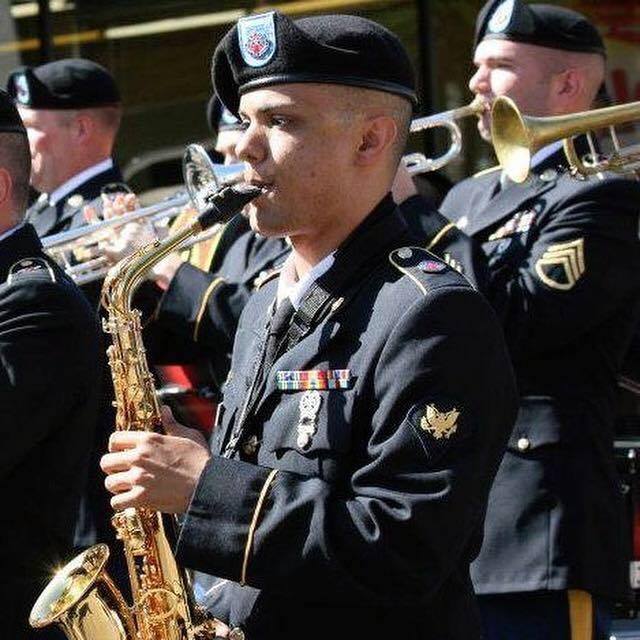
Playing music in band, pit orchestra. When I play music with other talented (not mediocre) musicians, I feel most connected to people. It’s an ineffable language so few can speak and understand. It doesn’t require words; it’s an almost “spiritual” trance one enters that once it ends, somehow you understand each other at a level that verbal conversation would take months or years to unravel.
I’ve participated in pit orchestra only once, which was in high school, but that is when I felt the most musically alive, and most like myself. I’m not sure why. I’ve been playing the sax since I was 8, I did middle school and high school concert band each year, I did 4 years of high school marching band (including state, regional, and national competitions every year), orchestra, jazz band, jamming with my dad and his friends, solo & ensemble, various quartets, and of course my first career in the Army Bands, but pit orchestra for some reason is where I felt I truly belonged, musically speaking. Maybe it has something to do with the versatility of the saxophone and, furthermore, the versatility of my own musical ability based on my past experiences.
Moment 2
Talking about books and video games. No specific memory comes to mind here, just generally whenever I talk about my favorite games and books. Once you get me started, I can’t shut up about it. I don’t know many true gamers, and hardly anyone likes to read books these days (sadly), so it’s rather upsetting that I can’t find anyone to talk about books with. I’ve considered joining a book club, but I can’t enjoy reading when I’m given deadlines, so that’s out of the question. When a leisurely activity becomes homework, it ceases to be leisure and instead becomes labor.
Moment 3
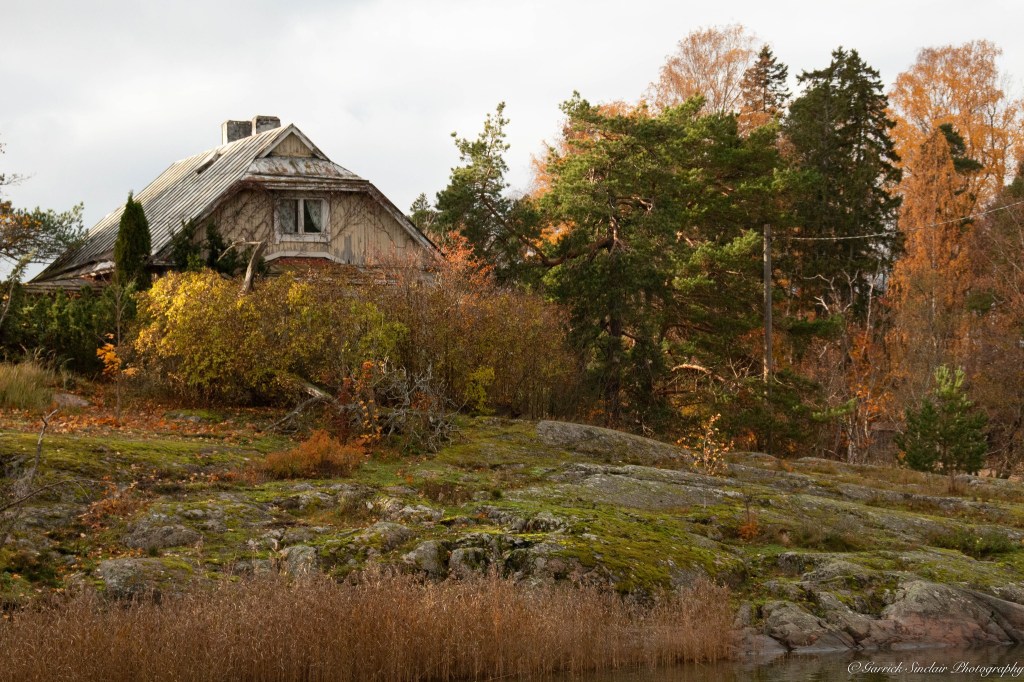
The photography trips with my dad, especially Yosemite and Algonquin national parks; hiking with my wife at Seurasaari, Finland. It’s the combination of being out in nature and enjoying God’s creation, and spending time with my dad especially as they were during times when he wasn’t home a lot because he traveled for work often (which I don’t blame him for; he had to take care of his family). But mostly, because of the hiking and quietude necessary for outdoor photography, these were the first times I can remember where being quiet with another human being is okay—that talking is not entirely necessary to enjoy another person’s company, even though my dad loves to talk!
One of the things that always makes me uncomfortable in social situations is the social pressure to always be saying something, but I don’t like saying anything unless I feel I actually have something worth saying (or I remain silent because people might think I’m being “too blunt” and therefore rude, so why bother?). I’m trying to unlearn (unmask) this, but I spend a lot of time thinking about something to say, even memorizing predictable conversation sets, which is extremely exhausting and anxiety-inducing (more on that in the next article as well). This is pretty much why I hate small talk; it’s just meaningless noise and inauthentic conversation.
Often, when I’m around people, someone will feel the need to say to me, “You’re awfully quiet.” I mean, yeah. What do you want from me? A poem? I genuinely do not understand the “need” to say something when there’s nothing to be said. Why can’t I just sit here in silence and enjoy people’s company while they’re talking? I genuinely have a good time just listening to people (if it’s not too loud, in which case I get over-stimulated and can’t focus). If I feel the need to speak, I will. Placing pressure on me to talk is extremely anxiety-inducing.
Then comes the irony that when I do begin to say something, I’m often interrupted and talked over, or as I’m talking it’s visibly obvious they’re losing interest and they interrupt me to talk about something else to somebody else (probably because I’m monologuing about my special interest or giving a longer than expected answer to a question because, like most autistics, I’m deeply analytical?). Neurotypicals always say I need to talk more to make the situation more comfortable, but they never consider shutting up to make it more comfortable for autistics.
I’m rambling. I’m not sure what it is about silence that makes people so uncomfortable. There’s enough noise in the world as it is. Why fill it with the cacophony of nonsensical prattle?
Anyway, I hadn’t gone hiking and done photography for a long time until I visited my wife in Finland and we went to Seurasaari (Finland is her home country and she’s currently studying there for her master’s). The brisk, autumn air, the vivid colors, the sound of the wind and the Baltic Sea, the smell of it all, the silence and sparse conversation with my beautiful wife… It’s like I was missing a part of myself and suddenly rediscovered it.
Moment 4
Every Bible study I’ve ever taught. Whenever I teach God’s Word, whether in preaching or teaching, this is when I feel the most alive. I often dread the end of a Bible study because the allotment of time is never enough! I feel the most fulfilled when I’m teaching in an educational setting or having some other cerebral conversation.
Moment 5
When I took the youth and college students to Higher Things, specifically after our daily debriefings. Apparently, no other pastor had done what I did with them before, which was to come together at the end of each day’s events, and each person share one thing they learned that day that really stuck out to them (omitting the parent chaperones because the conference is about the youth and their learning). The conversations were always edifying and uplifting, and they often felt the need to share more than one thing, which I of course permitted. The two parents who chaperoned deeply appreciated what I had done. After each gathering, I felt fulfilled in what I was doing.
I’m not sure yet what all this will mean as I further learn to unmask, but these will come up again throughout the book, which I’m looking forward to and will commence writing about in further blog posts.
 The Lutheran Column