

Education and the Humanities
- “School is shortened, discipline relaxed, philosophies, histories, languages dropped, English and spelling gradually neglected, finally almost completely ignored… Why learn anything save pressing buttons, pulling switches, fitting nuts and bolts?” (p. 53). — Guy Montag to Mildred
Much like 1984, this novel is rather prophetic of the times we could be heading into at the rate with which things are going. In the 1950s (Fahrenheit 451 was published in 1953), the school day started at 0730 and ended around 1600. Today, and this varies depending on the area and level of grade school, the school day on average starts around 0800 and ends around 1500. The difference is not substantial; therefore, it is likely not of significant concern at this time.
Laxed discipline, however? One could easily argue that the younger generations are lacking in discipline, even my own (Millennials). This perception can be attributed to various social and technological shifts. First, the pervasive influence of digital technology has cultivated a culture of instant gratification. Access to information, entertainment, and social interaction is instantaneous, diminishing the necessity for patience, exercising self-control, and long-term effort—qualities that are central to discipline.
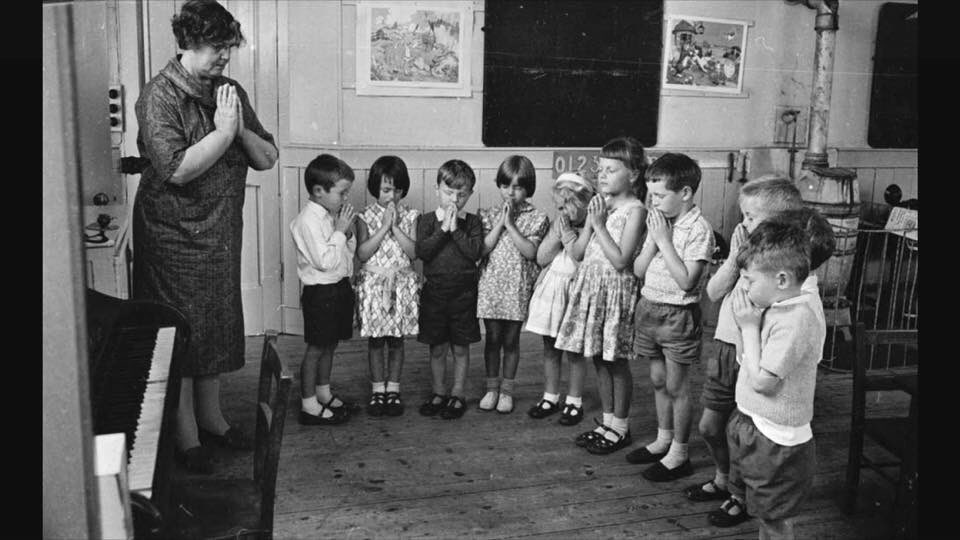
Second, educational and parenting philosophies have dramatically shifted from the 1950s (e.g., public schools in the ’50s used to begin not just with the Pledge of Allegiance—a commonality in my elementary school days and now a rarity these days—but also morning prayer, which today would be likened to a crime). Today’s educational and parental philosophies emphasize self-expression and individualism over obedience (the 4th Commandment, “Honor thy father and mother,” is no longer a household staple). While this might foster creativity and self-confidence, it can also lead to a relaxation of boundaries that traditionally reinforced disciplined behavior. Additionally, the economic and social structures of contemporary society often allow for more flexible lifestyles, reducing the rigidity and routine that once instilled a sense of discipline. While these changes may reflect broader progress and adaptation, they concurrently challenge the cultivation of the disciplined habits that were more prevalent in older generations.
The decline in language proficiency is also evident in society. In the past, students were taught Latin in schools, but now struggles with English grammar are common. (I often joke that America’s national language is 3rd grade English.) This is highlighted by Montag’s argument that English and spelling are being neglected. Today, there is a general lack of understanding of basic differences between words such as “loose” and “lose,” as well as confusion surrounding possessive pronouns like “there,” “their,” and “they’re.” Contractions are also frequently misused, with many mistaking “you’re” for “your,” or vice versa, and displaying an incorrect understanding of words like “should’ve/could’ve/would’ve” as they mistakenly write them as “should of/could of/would of.”
Finally, there is “Why learn anything save pressing buttons, pulling switches, fitting nuts and bolts?” Bradbury is critiquing a society that values practical, mechanistic skills over critical thinking and intellectual growth. The point being made is that when a society prioritizes efficiency and functionality over comprehensive education and intellectual development, it diminishes the importance of learning, creativity, and independent thought.
Relating this to today, the quote highlights concerns about the potential consequences of an overly specialized, technology-driven education system (and, arguably, social life). In contemporary society, there is a growing emphasis on STEM education (Science, Technology, Engineering, and Mathematics) and vocational training aimed at immediate job readiness. While these skills are indubitably important, Bradbury’s quote serves as a caution against neglecting the Humanities, art, music, and theology (in private Christian universities), which foster critical thinking, ethical reasoning, and a deeper understanding of the human condition.
The Superficiality of our Age of Entertainment
- “More sports for everyone, group spirit, fun, and you don’t have to think, eh?” (p. 54).
Here, Bradbury highlights society’s emphasis on entertainment and superficial activities as a means to distract people from critical thinking and intellectual engagement. The character is pointing out that the focus on sports, group activities, and fun serves to create a sense of unity and enjoyment, but it also discourages individual thought and reflection. The underlying critique is that such distractions prevent people from thinking for themselves, exploring deeper issues, and ultimately understanding themselves and the world around them. This reflects the broader theme of the novel, which deals with the dangers of censorship and the suppression of intellectual freedom.
We see the prophetic nature of this quote in five distinct ways today:
- Media and Entertainment Saturation: Modern society is inundated with various forms of entertainment, from sports and reality TV shows to social media and and a seemingly interminable supply of streaming services. People listen to the news channels and their favorite “influencers” on TikTok to tell them what to think rather than learning for themselves and from the wisdom of others how to think. This constant barrage of entertainment can serve as a distraction, keeping people occupied with superficial content rather than engaging with deeper, more meaningful issues. The ideal of being constantly entertained has also invaded our churches, churchgoers valuing entertaining music over deeply edifying hymns that inform and instruct our faith.
- Decline of Critical Thinking: With the rise of quick, easily digestible content, there is a concern that critical thinking and intellectual engagement are declining. Many people prefer the convenience of consuming entertaining content over investing time in reading, reflecting, and discussing complex ideas. Instead, cognitive dissonance has become a plague, and individuals become apoplectic when they encounter diverse ideas rather than engaging in meaningful discussions.
- Group Mentality: While there’s nothing wrong with shared group activities in and of themselves, a heightened focus on group activities and shared experiences, especially through social media, can lead to herd mentality. This can stifle individual thought and discourage people from expressing dissenting opinions or thinking independently if it means social ostracization.
- Escapism: In a world full of challenges and complexities, many people turn to entertainment as a form of escapism. While this can provide temporary relief, it can also prevent individuals from confronting and addressing important personal and societal issues, aside from becoming a 1st Commandment violation (“You shall have no other gods,” which the Small Catechism explains: “We should fear, love, and trust in God above all things”).
- Consumer Culture: The emphasis on fun and entertainment feeds into a culture that thrives on consumerism where people are encouraged to seek pleasure and immediate gratification, which is akin to ethical hedonism—if it feels good, it’s good; therefore, do it. If it feels bad, it’s bad; therefore, avoid it. This can lead to a dearth of depth in personal and society values, prioritizing instant enjoyment over long-term well-being and intellectual growth, which at times may be painful (especially when it comes to admitting one’s error).
By examining these parallels, it’s clear that Bradbury’s warning about the dangers of a society focused on superficial pleasures and distractions remains pertinent. Rather, we should seek a balance between enjoying entertainment and engaging in thoughtful, meaningful activities that foster both intellectual and personal growth.
Additional Threats to Critical Thinking & Literacy
- “We must all be alike. Not everyone born free and equal, as the Constitution says, but everyone made equal. Each man the image of every other; then all are happy” (p. 55).
In the dystopian society Bradbury pictures in this novel, society is attempting to enforce conformity and eliminate individuality. The point is that in this society, true equality is not achieved by ensuring freedom and equal rights for all, but by making everyone identical, thereby erasing differences. The belief is that by making everyone the same, conflict and unhappiness can be avoided, as there would be no basis for comparison or competition. One of the primary ways this problem manifests itself today is the false notion that there are no differences between men and women—that men can be women and women can be men, or even something else undefinable.
The society in the novel misunderstands the concept of equality. Instead of celebrating diversity and ensuring equal opportunities, it imposes uniformity, stripping away individuality and personal freedoms. A simple example today is when female athletes are stripped of their individuality and personal accomplishments when biological males posing as women are allowed to compete in women’s sports and dominate the competition because of their biological advantage; but because they’re “women,” liberal-minded individuals see no problems of comparison or competition.

Additionally, globalization and mass media can lead to cultural homogenization, where local traditions and unique cultural identities are overshadowed by dominant global cultures. This can result in a loss of diversity and the unique characteristics that enrich societies. For example, this can be easily perceived in the global spread of Western fast-food chains such as McDonald’s and Starbucks. These brands have become ubiquitous in cities around the world, often at the expense of local food traditions and businesses. I remember when I went on a pilgrimage to Israel with a class group, we were struck to find KFC as a common fast-food chain in the cities (we jokingly called it Kentucky Fried Camel).
All joking aside, this homogenization can lead to a loss of local identity. As Western fast-food chains proliferate, they can overshadow and even replace local eateries that serve traditional cuisine, which can lead to a loss of local culinary traditions and cultural identity. There are more issues homogenization can bring, but this should suffice.
The other issue this quote brings to light is educational and professional uniformity. In some educational systems and workplaces, there is a push toward standardization and uniformity, which can limit creativity and innovation. People may feel pressured to conform to certain norms or expectations rather than pursuing their unique talents and interests.
Lastly is political and social pressure. In many societies, there is pressure to conform to prevailing political or social ideologies. This can be perceived every June during Pride Month—corporations immediately turning their logos across all their social media accounts to rainbow colors. While many view this as staunch support for the LGBTQIA+ community, my argument is that corporations engage in such actions not out of altruism but fear. This is because dissenting opinions or unconventional ideas from the pride agenda will be met with hostility and/or censorship, or in their case boycotting, thus limiting dialogue and critical thinking.
- “A book is a loaded gun in the house next door. Burn it… Who knows who might be the target of the well-read man?” (p. 56).

This, I believe, is the hub of the entire book, not just because Montag is a fireman whose job is to burn books, but mainly because of the point Bradbury is trying to drive home. He is conveying the idea that books are seen as dangerous because they contain ideas that can challenge the status quo, provoke critical thinking, and inspire change. By comparing a book to “a loaded gun,” the character emphasizes the potential power and threat that knowledge and independent thought pose to a controlling, oppressive society. The notion of “burning” books is more than literal concerning Montag’s vocation; it is a metaphor for censorship and the eradication of dissenting ideas to maintain societal conformity and prevent individuals from becoming too knowledgeable or influential.
In the novel, books are seen as dangerous because a “well-read man” represents someone who is knowledgeable, thoughtful, reflective, and capable of independent thinking that doesn’t conform to the current status quo that’s being propagated. Such individuals are seen as threats because they are less likely to be controlled and more likely to question and resist change. This has relevance to issues today, especially progressives whose entire philosophy is about introducing change not gradually (conservatism) but immediately, or at the very last as soon as possible.
- Censorship and Information Control: Censorship remains a significant issue today. Elon Musk (allegedly) took over Twitter (presently “X”) to address the issue of the censorship of conservative-minded individuals. There is also the banning of certain books in public libraries. While there are absurd cases of libraries still banning classics like To Kill A Mockingbird, I do hold the opinion that there are very specific books that ought to be banned, which are LGBTQIA+ apologetics books that teach children how to have oral sex. Pornography, especially that which targets children, ought to be banned from public, and the authors and publishers imprisoned for child exploitation.
- Power of Knowledge: “Knowledge is power” goes the modern proverb. There is truth to this. The idea that knowledge is powerful and potentially dangerous is still relevant. Education and access to information empower individuals to think critically and question authority. That does not mean one becomes licentious in their behavior, but when something doesn’t seem quite right, they can challenge it with intelligent inquisitiveness. The ability to question an authority’s decisions gives one power, which can be perceived as a threat by the one who is in authority, especially if they view themselves as an authoritarian.
- Misinformation and Propaganda: The flip side of censorship is the wide spread of misinformation and propaganda, which can also be utilized to control and manipulate public perception. Simply think of every news channel. It is common journalistic practice to put a spin on a story, which, according to Britannica’s definition, is “the sophisticated selling of a specific message that is heavily biased in favour of one’s own position and that employs maximum management of the media with the intention of maintaining or exerting control over the situation, often implying deception or manipulation.” By inundating people with false or misleading information, the ability to think critically and independently can be undermined. Ergo, never believe a single news source. Read. Do your own research. This will take time, and to an earlier point, it requires discipline, which is severely lacking today. Thus, the media counts on our lack of intellectual discipline.
- Freedom of Speech and Expression: In a healthy society, diverse ideas and viewpoints should be encouraged (unless it targets children with pornographic materials), allowing individuals to make informed decisions and contribute to societal progress.
The Trifold Solution to Our Dilemma: #1 Read Books
Lastly is three critical points made by the character, Faber:
- “We have everything we need to be happy, but we aren’t happy. Something’s missing” (p. 78).
Despite having all the material comforts and conveniences of modern life, people still feel a sense of emptiness and dissatisfaction. Faber is recognizing that true happiness and fulfillment come from more than just physical possessions and superficial pleasures; there is a deeper need for meaning, purpose, and authentic human connection that is not being met. He explains that three things are missing.

The first: “Do you know why books such as this are so important? Because they have quality. And what does the word quality mean? To one it means texture. This book has pores. It has features… So now do you see why books are hated and feared? They show the pores in the face of life. The comfortable people want only wax moon faces, poreless, hairless, expressionless” (p. 79).
Once again underscoring the paramount importance of books, Faber elucidates why books are valued and simultaneously feared in the dystopian society depicted in the novel. He is explaining the concept of “quality” in literature, which he defines as the depth, texture, and richness of real life that books reveal. Books are vital because they reflect the true complexities and imperfections of existence—what he metaphorically describes as “pores” in “the face of life.”
- Quality and Texture: The term “quality” here refers to the depth and authenticity of the content in books. “Texture” signifies the detailed, intricate, and sometimes rough aspects of life that books capture, making them valuable for understanding and experiencing the full spectrum of human existence and expression.
- Books as Mirrors of Life: Books show the “pores” in the face of life, meaning they reveal the flaws, complexities, beauties, and real experiences of the world. They provide insight into human nature, society, joy, and the myriad issues people face, offering a reflection that is both honest and profound.
- Fear of Reality: The society in the novel fears and hates books because they expose these uncomfortable truths (though I suspect people today hate books simply because they’re lazy thinkers). The “comfortable people” prefer a sanitized, idealized version of reality—described as “wax moon faces, poreless, hairless, expressionless.” This represents a desire for a smooth, unchallenging, and superficial existence, free from the messiness and challenges of real life.
In contemporary society, there is a tension between engaging with deep, meaningful content and preferring easy, superficial entertainment, as discussed earlier. To bring up the worship wars again, people prefer the superficial, shallow entertainment of contemporary worship in a praise band over the deep and meaningful content of a poetical hymn. Quality literature, hymnody, and art often challenge us to confront difficult truths and think critically, while more superficial content offers an escape so we don’t ever have to think. It’s far easier to feel.
The metaphor of “wax moon faces” can be related to polished, often unrealistic portrayals of life in social media, advertising, movies, and television. Just as the society in the novel prefers a poreless, expressionless façade, people today can be drawn to curated, idealized images that mask the complexities and realities of life. For example, television shows often prioritize sensationalism, presenting a superficial view of life (e.g., the producers of the show The Rings of Power forsaking everything having to do with the universe Tolkien created in order to cater to a specific political agenda, sacrificing art and good storytelling to the god of propaganda).
Lastly, the quote reaffirms the importance of literature and quality writing in helping us understanding ourselves and the world. Books with “pores” challenge us to think deeply, empathize with others, and grapple with the real, sometimes uncomfortable aspects of life.
The Trifold Solution to Our Dilemma: #2 Reflection
The second thing that’s missing is: “Leisure… Off hours, yes. But time to think? …The televisor… tells you what to think and blasts it in… It rushes you on so quickly to its own conclusion your mind hasn’t time to protest, ‘What nonsense!’ …Books can be beaten down with reason. But with all my knowledge and skepticism, I have never been able to argue with a one-hundred-piece symphony orchestra, full of color, three dimensions, and being in and part of those incredible parlors” (p. 80).
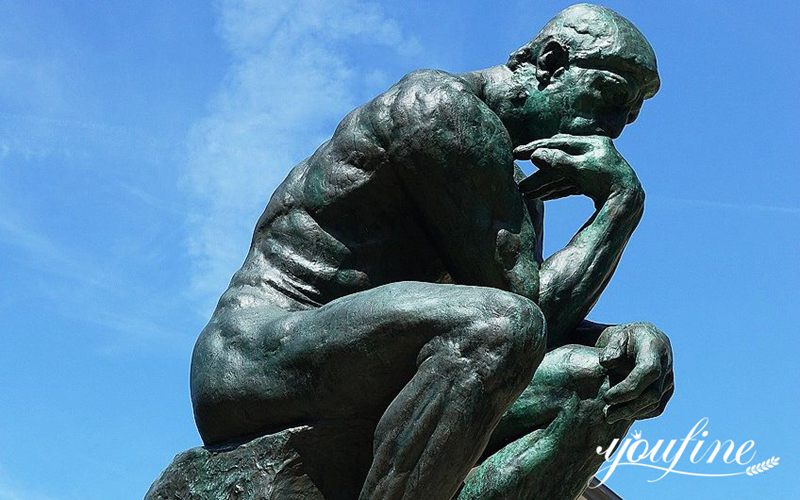
Faber illustrates the difference between genuine leisure time that allows for critical thinking and reflection, and the superficial leisure provided by mass media, which bombards people with content and dictates their thoughts. He contrasts the immersive, overwhelming nature of television (referred to as the “televisor”) with the contemplative, rational engagement that books offer.
- Superficial Leisure vs. True Leisure: Faber distinguishes between “off hours,” or free time, and genuine leisure that provides the opportunity for introspection and independent thought. The society in the novel only allows for superficial leisure, filled with distractions rather than meaningful reflection, and being told what to think rather than knowing how to think for themselves.
- Manipulative Media: The “televisor” represents the overwhelming, manipulative nature of mass media. It not only entertains but also controls and dictates thoughts, presenting information so rapidly and compellingly that viewers cannot critically engage or question it. Indeed, they dare not.
- Power of Media Immersion: The mention of a “one-hundred-piece symphony orchestra” in a 3-dimensional, colorful environment is not a critique of this wonderful genre of classical music but rather emphasizes the seductive power of immersive media. Such experiences captivate the senses and emotions, making it difficult to resist or critically analyze the content being presented. Simply think back to the tragic incident concerning George Floyd. The 24/7 news cycle led to sensationalism, where media outlets prioritized dramatic and emotional content to attract viewers, often at the expense of nuanced, in-depth reporting. The rapid spread of information about the incident also included misinformation and an incomplete narrative (see the term spin above), which shaped public opinion based on flawed and biased reporting. Media immersion also leads to desensitization, which continuous exposure to graphic and violent content often desensitizes viewers, reducing the emotional impact and urgency over time.
- Books and Critical Thinking: In contrast, books require active engagement and critical thinking. They can be “beaten down with reason,” meaning readers can analyze, question, and debate even the ideas presented in the book. This further accentuates independent thought and healthy skepticism.
As already noted, people today are inundated with information from television, social media, and the Internet. This constant flow of media saturation can overwhelm the senses and discourage deep, reflective thinking, similar to the televisor in the novel. The rapid pace and sheer volume of information available today can prevent people from taking the time to think critically about what they’re consuming. Thoughtless conclusions and superficial understanding often replace thorough analysis.
Modern media, including advertising and sensationalist news, often uses emotional and sensory appeals to influence opinions and behaviors, making it difficult for individuals to maintain objective, critical perspectives. Lastly, the quote underscores the enduring importance of reading and engaging with books, which provides a space for contemplation, reasoned argument, and intellectual growth. Unlike the rapid, immersive nature of much modern media, books encourage slow, deliberate thinking and critical analysis.
The Trifold Solution to Our Dilemma: #3 Taking Action
The last thing that is missing is: “the right to carry out actions based on what we learn from the interaction of [the quality of information and leisure to digest it]” (p. 81).

Faber emphasizes the importance of having access to high-quality information, the time to reflect on and understand that information, and the ability to act based on this understanding. It suggests that true freedom, happiness, and the foundation of a healthy society depend on these three elements:
- Quality of Information: This is the summation of the first thing that is missing. Access to accurate, reliable, and meaningful information is essential, which are stored in books (yes, there is information online, but more on that later). This kind of information provides the depth and richness needed for people to understand the world and their place in it. For example, I read Fahrenheit 451.
- Leisure to Digest Information: This is the summation of the second thing that is missing. People need time to reflect, analyze, and understand the information they receive. Without this leisure, individuals cannot fully process or critically engage with the knowledge they acquire. For example, I reflected on Fahrenheit 451, which led me to number 3:
- Right to Act: Based on the understanding gained from the quality of information and reflective thought, individuals should have the freedom to take informed actions. This right is crucial for both personal and intellectual growth, as well as societal progress. For example, after reflecting on Bradbury’s novel, I wrote this article in the effort to impress upon people how vital the Humanities, critical thinking, and literacy are.
Today, we have unprecedented access to information right at our fingertips. We carry it around in our pockets with the overabundance of information we receive through the Internet, social media, and other digital platforms. Yet this instantaneous access to an incalculable amount of information is not always advantageous, as the quality of this information can vary widely, making it crucial to discern reliable sources from misinformation. Hence the all-important time for leisure—to digest what one reads online, even this article.
Modern life often moves at a rapid pace with constant demands on our time, adding on top of that the inundation of advertisements on billboards, the radio, our social media profiles, and so on constantly demanding our attention as well. By opening a book, one doesn’t need to worry about running across that annoying ad for the millionth time that day. Additionally, finding moments for deep reflection, critical thinking, and even meaningful conversations with people face-to-face can be challenging but is necessary for truly understanding complex issues, especially when they are issues that concern people.
Conclusion
I want to end on a somewhat lighter note with the following humorous quote: “The books are to remind us what asses and fools we are. They’re Caesar’s praetorian guards, whispering as the parade roars down the avenue, ‘Remember, Caesar, thou art mortal'” (p. 82).
The sagacious Faber suggests books are like our witty friends who remind us of our own folly, but in a way that’s meant to help us grow and learn. Drawing on history, he references Caesar’s praetorian guards (which he wouldn’t know without reading books!), who would whisper to him during parades, reminding him of his mortality (Caesars, after all, had a penchant for thinking they were gods). This was a way to keep Caesar humble, ensuring he didn’t get too carried away with his own importance. Similarly, books serve as our intellectual guards. When we read, it’s like having a sage whispering in our ear, “Remember, you’re only human, and there’s always more to learn.”
Books keep us grounded by reminding us of our own fallibility and encouraging us to question even ourselves, not just the world, society, or those in questionable authority. Our own ideas just might be wrong. They help prevent us from becoming too haughty or complacent by offering new perspectives and challenging our beliefs. Today, where information is abundant and our social media accounts are often the altars upon which we sacrifice intellectual honesty to our own fictions of flimsy self-importance, books are more crucial than ever. They provide a necessary check on our intellectual humility, urging us to stay curious and open-minded.
So, the next time you dive into a book (or a painfully long article like this), think of it as your wise, humorous friend keeping you grounded, reminding you to stay humble and always ready to learn more. For in the pages of a book, we find companions who never tire of our company and always have a story to tell.
 The Lutheran Column
1 thought on “Bradbury’s Warning of Demolishing the Humanities, Critical Thinking, and Literacy – ‘Fahrenheit 451’”