
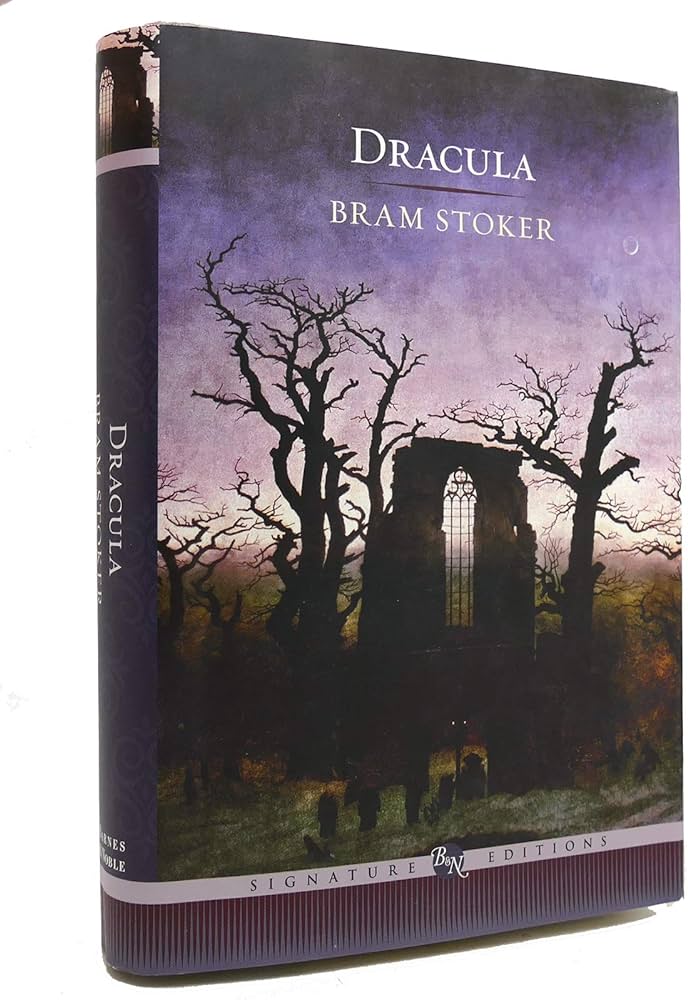
As a side note before I begin, please don’t watch the movie Bram Stoker’s Dracula starring Keanu Reeves, Winona Ryder, Gary Oldman, and Anthony Hopkins. It is absolutely horrible, relegating this classic novel to soft porn. I love all those actors, but I have no idea what the director, Francis Ford Coppola, was smoking when he directed it. Rotten Tomatoes’ 74% rating is much too generous.
Anyway, let’s move on with some of the best quotes from this great classic.
- “It is odd that a thing which I have been taught to regard with disfavour and as idolatrous should in a time of loneliness and trouble be of help” (p. 26). — Jonathan Harker’s journal, about the crucifix.
- In the face of pure evil, the crucifix can convert even the staunchest of iconoclasts!
- “Blood is too precious a thing in these days of dishonourable peace; and the glories of the great races are as a tale that is told” (p. 27). — Count Dracula
- Here, Count Dracula reflects a sense of nostalgia and loss for past eras of valor and honor. It suggests that in the contemporary times in which the novel takes placed, marked by a “dishonourable peace,” the value of noble bloodlines and their heroic deeds has diminished. While Dracula certainly has a macabre fascination with blood as a vampire, “blood” symbolizes lineage and heritage, which are seen as precious but undervalued in the present age he’s living in. The “glories of the great races” refer to the legendary achievements of noble families or races, now regarded merely as stories from the past. This evokes a longing for a time when such qualities were celebrated and revered.
- “…though sympathy can’t alter facts, it can help to make them more bearable” (p. 85). — Mina Murray’s journal.
- I love this quote as Mina wrote about her grief. The whole point of sympathizing with others in their bereavement is not the pointless attempt to change the fact that their loved one has died but to help them carry the burden. To use an example from another beloved book, it’s like when Sam helped Frodo carry the burden of the Ring up Mt. Mordor in The Return of the King.
- “The bride-maidens rejoice the eyes that wait the coming of the bride; but when the bride draweth nigh, then the maidens shine not to the eyes that are filled” (p. 92). — Dracula
- Dracula uses a metaphor to describe how anticipation and expectation can be overshadowed by the fulfillment of an actual event. The bride-maidens, who are beautiful and admired while they wait for the bride, lose their luster once the bride herself arrives. Similarly, the excitement and beauty of waiting are eclipsed by the arrival of what one has been eagerly anticipating. It highlights how the main event or person of interest becomes the sole focus, making all other things seem less significant in comparison. This is a great foreshadowing of Dracula’s main actions in the novel.
- “I suppose a cry does us all good at times—clears the air as other rain does” (p. 163). — Mina’s journal.
- Tears are a vital part of the healing process, as they help cleanse the wound of the soul.
- “I could not resist the temptation of mystifying him a bit—I suppose it is some of the taste of the original apple that remains still in our mouths” (p. 165). — Dr. Van Helsing to Mina.
- “Ah, it is the fault of our science that wants to explain it all; and if it explain not, then it says there is nothing to explain” (p. 172). — Dr. Van Helsing to John Harker.
- A great quote to borrow when atheists say science cannot prove God exists, so therefore He mustn’t exist.
- “I suppose there is something in a woman’s nature that makes a man free to break down before her and express his feelings on the tender or emotional side without feeling it derogatory to his manhood” (p. 208). — Mina Harker’s journal.
- The social landscape of the past is vastly different from that of today, as evidenced by a popular meme on the Internet asking women whether they would rather be alone in the woods with a man or a bear. This seemingly humorous question speaks to the perceived danger and threat men pose to women when they’re in vulnerable positions. However, it also highlights the sad reality of the current prejudice toward men. One response to this meme has been, “Men ,would your rather share your feelings with a woman or a tree,” many men opting for the tree. This response underscores the fact that many men feel judged and betrayed by women when sharing their feelings with them. As a result, some men may prefer to bottle up their emotions instead of seeking support from their female partners.
- This observation aligns with Mina’s perspective in her journal about women being more adept at handling emotional vulnerability. This is evident in men who reportedly prefer a female therapist, as women naturally tend to be more intuitive and sensitive about emotional matters.
- “A brave man’s hand can speak for itself; it does not even need a woman’s love to hear its music” (p. 215). — Mina’s journal.
- Mina states her belief that a truly courageous and noble man demonstrates his worth through his actions, which speak volumes on their own. His bravery and deeds are so compelling and significant that they do not require validation or appreciation from others, including the love of a woman, to be recognized or valued. Mina writes such a reflection because of the insurmountable bravery of the men around her—John her husband, the legendary Dr. Van Helsing, and their friend Dr. Seward. The “music” metaphor implies that the inherent virtue and strength of a brave man’s actions are self-evident and resonate on their own merit.
- “…it is in trouble and trial that our faith is tested—that we must keep on trusting; and that God will aid us up to the end” (p. 263). — John’s journal.
- An excellent rumination from John. His words reflect Proverbs 3:5-6, “Trust in the LORD with all your heart, and lean not on your own understanding; in all your ways acknowledge Him, and He shall direct your paths.”
- “Thus we are ministers of God’s own wish: that the world, and men for whom His Son die, will not be given over to monsters, whose very existence would defame Him. He have allowed us to redeem one soul already [Mina], and we go out as the old knights of the Cross to redeem more” (p. 291). — Dr. Van Helsing to John.
- I believe this is the moral of the book. These are beautiful words, and they remind me of Luther’s explanation in the Small Catechism of the 3rd petition of the Lord’s Prayer, “Thy will be done on Earth as it is in Heaven,” which he writes, “What does this mean? Answer: The good and gracious will of God is done even without our prayer, but we pray in this petition that it may be done among us also. How is God’s will done? Answer: God’s will is done when He breaks and hinders every evil plan and purpose of the devil, the world, and our sinful nature, which do not want us to hallow God’s name or let His kingdom come; and when He strengthens and keeps us firm in His Word and faith until we die. This is His good and gracious will.”
- “What will each of you give? Your lives, I know; that is easy for brave men. Your lives are God’s and you can give them back to Him; but what will you give me?” (p. 300). — Mina to John, Van Helsing, and Dr. Seward.
- Mina is addressing the brave men around her, acknowledging that they are willing to sacrifice their lives for a noble cause, which is admirable. However, she challenges them to consider a deeper level of commitment and sacrifice. For a man, giving one’s life for another is a surprisingly easy thing to do. They go to war for their country and their fellow man. A man will die for his wife, just as Christ calls him to do as an example of His own sacrifice for the Church (Ephesians 5:25).
- Yet the real challenge Mina poses is encapsulated in her question, “but what will you give me?” This implies that true sacrifice involves more than just the willingness to die; it encompasses what they are willing to offer in terms of their dedication, actions, and personal contributions while they are still alive. It calls for a commitment that goes beyond the ultimate sacrifice of life and delves into what they are willing to do and endure in the present to achieve their goals or support the cause at hand, and in John’s case, to love his wife. I learned this from another pastor, but whenever I counsel a couple engaged to be married, I always ask the man this question, “Are you willing to die for your future wife?” Immediately, he always nods his head and says yes. Then I follow up with, “Are you willing to give the remote to her?” And he hesitates. It is the enigma of manhood that he is willing to die for someone he loves, but hesitates to sacrifice something more trivial.
 The Lutheran Column
Wonderful analysis!
<
div>Not one filmed versi
LikeLike