
Chapter 3: The Redeemed Body
It is no secret that in our culture today, body dissatisfaction is rampant, whether that be in the form of body image issues or someone being unhappy with the body and gender they were born with. As mentioned on the previous page that covered the previous chapter, this body dissatisfaction is indicative of Gnosticism rather than authentic Christianity. Why does this happen?
Kleinig suggests, “The most obvious reason is the desire to stand out, attract attention, and gain the approval of others. Add to that the pressure from media to match the ideal appearance of air-brushed models, film stars, and celebrities. Consequently, people try to remake themselves in the image of these ideal people” (p. 60). There is not only pressure from media but also the education system and parents (which is no less than child abuse). Teachers and parents are pressuring their children to “choose” their gender rather than being content with what God has given them and glorifying God in their bodies (1 Corinthians 6:19-20).
Contrary to this gender ideology, we confess with Scripture that God is the potter and we are the clay. “But now, O LORD, You are our Father; we are the clay, and You our potter; and all we are the work of Your hand” (Isaiah 64:8). To repeat from the previous page, God is the inerrant Creator; He does not make mistakes. Whatever discomfort or dissociation you have with your body is not the result of the “truth” of what you think you are (Gnosticism) but who God has made you. And to reiterate again, if God can err in something as foundational as creation, then He can err in other things, like salvation, and He is therefore untrustworthy and Christianity is a sham.

On a somewhat lesser level, many of us do other things to cover our shame like Adam and Eve in the Garden—with dressing up, jewelry, makeup, hairdos, and tattoos. Others will go to extremes. Some will undergo gender reassignment surgery, others will “have cosmetic plastic surgery, not to correct deformities such as a cleft palate, but to improve their appearance. They undergo a physical makeover in order to become more sexually attractive or to appear younger than they actually are.” Ironically, “these operations can’t change them as persons. They don’t make them beautiful people; they merely disguise their self-dissatisfaction” (p. 61). All of these—excessive fashion, jewelry, makeup, tattoos, gender reassignment, cosmetic surgery, etc.—are masks. They don’t accentuate what we think about ourselves (or wish to think about ourselves); they hide our dissatisfaction and insecurities. Even “popular psychology” aims to “[reprogramme] our minds with positive thinking” (p. 61), but this, too, is only a mask of our deeper dissatisfaction with ourselves.
At the root of this issue is where your self-worth comes from. Is it intrinsic or extrinsic? The Christian confession is that your self-worth does not come from within you but from without—from God your Creator and Redeemer. Thus, the premise of this chapter is the following: “[God in His Word] tells us that even though our spiritual ugliness is wrongly projected from the soul to the body, both need to be completely recreated and renewed from the inside out… We all need to start from scratch by being born again in a heavenly way (John 3:3, 5). And that is what God the Father provides for through his incarnate Son. Jesus redeems the body, transforms the mind, and creates a new self (Rom 12:1-2; Eph 4:20-24; Titus 3:4-7)” (p. 62).
We don’t need physical beautification, gender reassignment, cosmetic surgery, or cognitive reprogramming. What we need is Baptism—we need Jesus. We don’t need to dress ourselves up with makeup, or tattoos, or fashion, or cosmetics, or the opposite gender (or a made-up one). Rather, Jesus dresses us up with His own righteousness in Baptism (Galatians 3:27). We’ll talk more about the Sacraments later.
Our self-worth begins with the incarnation of Jesus. That God came to His human creatures as a human male is proof that human bodies matter. “God our Creator regards the human body so highly that he chose to take on a human body to rescue humankind from bodily corruption and spiritual ruin… Jesus engaged with people in a bodily way… He did not just associate with them physically in order to identify himself physically with them; he engaged with them physically to redeem them body-and-soul for life with God the Father” (p. 63).
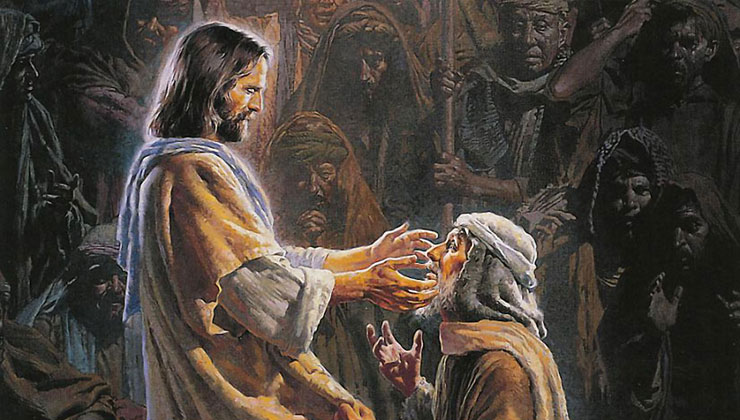
Why do you think the Gospels detail so many accounts of Jesus’ miracles? He touched lepers (Matthew 8:3), the blind (Matthew 9:29; 20:34), the tongue of a mute man to recover his speech (Mark 7:33), and dead people to bring them back from death (Matthew 9:25; Luke 7:14). It’s no wonder why the suffering wanted to touch Him (Matthew 9:20-22). The point of these miracles is to point to the bodily resurrection, as Jesus indicates when He raises Lazarus from the dead (John 11:17-27). Thus, when we read or hear these miracle narratives, we can certainly hope for physical healing in our own lives, but even more we look toward the resurrection that is to come that will give us eternal physical and spiritual healing.
Kleinig describes Jesus’ incarnation as “the bodily theophany of the Father (Heb 1:3); by seeing him, we see the Father (John 14:9). In short, he makes God the Father known to us safely in physical human terms” (p. 65). The reason why he says “safely” is because of God’s theophany on Mt. Sinai, that no one can see God and live (Exodus 33:20). But in Jesus, we can safely look at Him. “His body has now become the place for theophany, the place where God shows his glory to all people, in order to give them access to his grace” (p. 64). In short, Jesus took on human flesh to restore it in His image and redeem it.

Just as important as Jesus’ incarnation is His ascension—that Jesus is still incarnate in His ascension. “He retains his human body, which now transcends all time and space, in order to interact with us in our bodies” (p. 65). Hebrews 2:14-15 helps us with this, which Kleinig explains, “Like the members of a human family that have the same genetic traits and the same physical characteristics, Jesus shares the blood and flesh of Adam’s descendants… Yet he does not just identify himself with us physically by his incarnation; he shares our human flesh and blood, so that he can share his flesh and blood with us. He becomes one of Adam’s children like us so that we can become children of God through him” (p. 66). In other words, through His incarnation and ascension, Jesus’ perfect humanity perfects our humanity by faith.
In His ascension, Jesus is our human High Priest. “As our exalted high priest, Jesus now pardons us sinners and reconciles us with God the Father. He is our human representative with God. He represents us in the presence of his Father; he brings God’s grace and mercy bodily to us and brings us with our bodies to God the Father” (p. 66). This is why the Hebrews author later says, “For we do not have a High Priest who cannot sympathise with our weaknesses, but was in all points tempted as we are [according to His humanity], yet without sin [according to His divinity/Godhood]” (Hebrews 4:15).
Furthermore, because Christ took on our flesh; has redeemed it in His birth, death, and resurrection; and intercedes for us in His ascension, by faith we are “re-imaged in Jesus” (p. 67). “He went through our whole lifecycle from birth to death in order to purify and sanctify our whole life in the body for eternal life with God” (p. 68).
To borrow St. Augustine’s term, we could say Jesus’ bodily life was a recapitulation of our humanity. Augustine uses this term in Jesus’ temptation in the wilderness. Jesus fasted in the wilderness for 40 days and 40 nights, perfectly resisting the temptation of the devil, which Augustine says was Jesus recapitulating what Israel did in the wilderness for 40 years. In other words, Jesus repeats Israel’s wilderness experience and in His perfection does what Israel failed to do—obey God perfectly, therefore functionally undoing the sin of Israel and making her perfect in Him, which is credited to her by faith. Israel is remade in the person of Jesus—the true Israel.
Similarly, we could say Jesus’ incarnation—His bodily life—was the recapitulation of our own bodily lives. Jesus experienced the common cycle of humanity, which is birth and death, but He does so with perfection. Therefore, by faith in this incarnate God, our own humanity is made perfect in Him, and His perfection is made ours by faith—we are “re-imaged” in Christ. Luther says it beautifully in one of his sermons (LW 57:121, 126):
[Christ] made it all pure in His body so that through Him what belongs to the old birth and this life does not harm us. Rather, it is considered to be as pure as His [birth and life] because I am clothed in His birth and life through Baptism and faith so that everything I do is also pleasing to God and is called a holy walking, standing, eating, drinking, sleeping, and staying awake, etc. …However, through faith he is altogether pure. Thus it is a holiness of someone else and yet our own, so that God does not wish to consider everything that we do in this life to be impure in and of itself, but that everything should be holy, precious, and pleasing through this Child who makes the whole world holy through His life… If you wish to boast of a holy object, why do you not praise the holy object that Jesus Christ, God’s Son, has touched with His own body? What does He touch? My living and dying; my walking, standing; my suffering, misfortune, and trials—all of which He experienced, bore, and passed through.
p. 68
After this, Kleinig spends a couple pages talking about how Christ’s body is the new Temple, which is vital to our understanding of Jesus’ incarnation, but I want to jump to how we have access to God through the incarnation of Jesus in His ascension. Kleinig begins to describe one of the three communication of attributes, which is Jesus’ genus majestaticum (kind relating to majesty). These three attributes are terms we use to speak of Jesus’ two natures and how they relate to one another without confusion and without mixing: His humanity and divinity. The genus majestaticum speaks to Jesus’ omnipresence. Kleinig puts it well:
By his physical ascension to the right hand of his heavenly Father, his human body with his human nature is no longer limited by time and space as it once was but is present wherever he wills to be (Eph 4:8-10). When the Bible maintains that Jesus now sits at the right hand of his Father, it does not refer to his spatial location… but to his enthronement as co-ruler with him and his royal position, status, and power.
p. 72

This is why we can say, contrary to the Calvinists, that the finite can contain the infinite. The finite contains the infinite according to the majesty of Jesus’ ascension and godhood as the Son of God. As co-ruler with God the Father—co-equal in kingship, status, and power—Christ has instituted physical means to give us safe access to God the Father. These are the Word and the Sacraments.
In the Eucharist, Christ gives us His true body and blood in the bread and the wine. In Holy Baptism, Christ cleanses us of our sins, gives us the gift of the Holy Spirit, and makes us children of God. Both of these are done by the power of His Word, as it is done in Absolution with the declaration, “I forgive you your sins.” Jesus uses His Word to give His means of grace to us in a bodily way:
Jesus uses God’s word as a physical means to give [his disciples] his Holy Spirit, the Spirit that creates faith and revives them, the Spirit that purifies them and makes them holy, the Spirit that transforms them and makes them more and more like Jesus. That is hard for us to comprehend because we think of words as immaterial entities, like our thoughts, even when they are written on paper, rather than physical sounds that are made by human mouths and heard by human ears. They are, in fact, just as physical as all our other actions, because they are spoken by people physically, with the air from their lungs, and are heard physically by sound waves through the air.
pp. 72-73
Not only does this confirm that Absolution is still a sacrament despite its invisible appearance, but it also re-emphasises the efficacy of God’s Word—that God’s Word does what He says it does. To speak redemption into our lives and make it physically real for us, Christ has instituted the physical means of grace to deliver this to us with His majestic power and glory. As I tell my catechumens all the time, the same Word that God spoke, “Let there be light,” and there was light, is the same Word that speaks, “I forgive you,” and you are forgiven; “This is My body, this is My blood… for the forgiveness of sins,” and it becomes His body and blood and forgives your sins; and when He speaks “I baptise you in the name of the Father and of the Son and of the Holy Spirit,” and you are made a child of God in the Holy Triune name of God.
The Word and Sacraments, therefore, give us safe access to God for redemption and the forgiveness of our sins. We hear it with our physical ears, we taste it with our tongues, and we feel it on our skin and in our hair when we are baptised.
As Kleinig continues, he makes a valid point, “To be sure, we use words to communicate with each other. Yet that is always done with the body… it accompanies and clarifies what we say by our body language, the language of gesture and posture, tone of voice and physical expression, action and reaction. In fact, body language determines the power of spoken words; it is an essential part of effective, affective communication” (p. 73).
This is why I am always purposeful with my body language when I’m doing the liturgy. As one example, when I am speaking God’s Word of Absolution, the words of “take and eat” and “take and drink” as I’m distributing the Eucharist, the post-Communion blessing, and the Benediction, I purposefully look into the eyes of my people to bodily speak God’s forgiveness, blessing, etc. with my body language.
Speaking synonymously of Christ’s incarnation, Kleinig calls Jesus “the embodied word.” As I speak Christ’s words to His people as His ordained minister, He not only speaks “the Father’s word to us; he embodied God’s word” (John 1:1-2, 14). This Spoken Word “is ‘the external word,’ ‘the embodied word’ that is heard in the reading of the Scriptures, spoken in the absolution, proclaimed in the sermon, sung in the liturgy, and enacted in baptism and in the Lord’s Supper” (pp. 74-75). In other words, God’s Word is always embodied by Christ since He eternally exists in the flesh, whether that be in the Word and Sacraments, the liturgy, or the sermon. Therefore, His Spoken Word always does bodily stuff to us, i.e., the forgiveness of sins, life, and salvation.
Again, the embodied Word is delivered to us in the Word and Sacraments. In Baptism, the bodily pastor:
…marks our body with the sign of the cross as with a brand, pours water over it, and lays his hand on our head for blessing… [F]ar deeper than that… the risen Lord Jesus reclaims our whole life in the body for himself from that day onward and for all eternity. In baptism the risen Lord Jesus washes us with the water that purifies us and makes us completely clean… He does not just sprinkle our hearts with his Spirit in order to give us a clean conscience; he washes our bodies so that they, too, are fit for life with him and his heavenly Father (Heb 10:22). That washing regenerates us completely and makes us new people with a new identity, a new way of life, and a new inheritance (Titus 3:3-7; cf. 1 Pet 1:3, 23).
p. 79

That new identity is child of God. Your identity is not your race, or your gender, or your sexual orientation, or your job title, or whatever it is. Your foremost identity is child of God—re-imaged in Christ—that informs and shapes the rest of who you are (as discussed on the previous page of this review essay) rather than the other way around. Your sexual orientation or gender identity does not tell you how to be a child of God. Rather, being a child of God—being re-imaged in Christ—tells you how to live as the male or female you were born (created) as, how to live free from sexual sin, how to live as a husband or wife according to its original design, how to live as an employee, how to live as a friend, and so on.

Moving on, Absolution “speaks the life-giving word of God to us in the divine service of worship (Heb 4:12). He speaks it physically to us through the voice of a pastor as his mouthpiece” (p. 80). Remember, God’s Word is efficacious; it does what He says it does. This is why the Gospels are vital to our understanding of the power of Christ’s Word. The Word we read and hear Jesus speak in the Gospels is the same powerful and efficacious Word He speaks to us today. Jesus spoke and the storm was calmed; Jesus speaks and you are forgiven. Jesus’ Spoken Word “does not just tell us how to live; it gives us eternal life. It does not just tell us what is wrong with us; it rights what is wrong about us” (p. 80). We call this Law and Gospel.

Lastly, in the Lord’s Supper, Christ “gives us his own living body and blood to eat and drink” (p. 82). The Lord’s Supper is a familial ritual. We call it Holy Communion not only because it communes—unites—us with Christ but also with one another. Families always gather around a dinner table. The church family regularly gathers around the Lord’s Supper Table.
These Word and Sacraments are what “re-image” us in Christ. We consume the spiritual food and drink that is Christ (1 Corinthians 10:3-4) in both Word and Sacrament. These spiritual foods are different than the food we normally eat and drink. “Normally, we assimilate food into our bodies, so that it becomes part of us. But by this food the Holy Spirit assimilates us into the body of Christ. We are changed into his likeness” (pp. 83-84).
Because Jesus is God incarnate, Luther says we have an “incarnate faith” (LW 26:261-267). As Kleinig says, “God never deals with us in a disembodied way” (p. 85). This is seen most clearly in divine, corporate worship. (“Corporate” comes from the Latin word corpus, which means “body.”) In the Divine Service, God comes to us and we come to God, both in embodied ways:
From a human point of view, the whole service is a human, bodily enactment in word and deed; everything is done by the assembled congregation. Yet, from God’s point of view, it is a divine enactment in which he is at work with his faithful people through his physically spoken and enacted word. He is at work in a two-way interaction with the congregation. First, there is his sacramental descent, in which God the Father gives us his Spirit and every other heavenly blessing through his incarnate Son by the means of grace. Then, corresponding with that, there is the sacrificial ascent of the incarnate Son, who offers us and our gifts back to the Father through his Spirit.
p. 86
Kleinig spends a lot more time on corporate worship, which is worth reading in your own copy of the book.
Afterwards, Kleinig finally gets to the heart of the book. In light of all we’ve discussed in this chapter—that your true body is what God has given you, that your self-worth begins with the incarnate Christ, that we are re-imaged in Christ through His embodied means of grace in Word and Sacrament, that Christ has redeemed our bodies—we come to the question: “How does God regard our bodies?” Kleinig answers, “He regards them as holy, just as holy as the human body of Jesus, for he does not consider us apart from Jesus, nor does he consider Jesus as our head apart from us” (p. 92).
Because God has made us holy in Christ, we can safely interact with Him in corporate, divine worship. He spends some time delineating this with 2 Corinthians 6:14-7:1; 1 Corinthians 6:19-20; Romans 6:11-23 and Ephesians 5:25-27, which I won’t cover here. I strongly encourage you to pick up your own copy of the book and read it yourself. But I will share one worthwhile quote on the necessity of attending divine worship:
Picture a married man and woman who have deliberately chosen not to consummate their marriage physically, even though they have no physical or emotional incapacity that disqualifies them from sexual cohabitation. They love each other dearly and are committed to each other in a mental and emotional personal relationship. Yet they have decided not to live together, engage in sexual intercourse, and have children… In fact, they dislike it and disown it because it is too demanding and complicated for them physically. It suits them to stay in touch with each other electronically, via cell phone and the internet. They opt for a virtual marriage, which is, in truth, no marriage.
p. 97
Such a lifestyle seems absurd, doesn’t it? Now replace marriage with church. A sexless, disembodied marriage is no marriage; a churchless, disembodied Christianity is no Christianity. Deliberately severing yourself from the church community—the Bride of Christ—is just as insane as cutting off a perfectly good arm (see 1 Corinthians 12:12-26).
Returning to the main thesis of the book—that we are to live by example rather than by argument—how are we to live by example in our redeemed bodies? Kleinig covers four interactions.

The first is going to church. “Bodily interaction with Jesus most obviously entails regular and faithful involvement in the service of worship” (p. 98). Not virtual, but real, bodily involvement. Virtual church is not real church; it’s a bootleg copy of the real thing. Word and Sacrament “cannot happen apart from our human bodies” (p. 98). You can stare at a photograph but that physical place doesn’t become real until you go there. I’ve seen photos of Yosemite hundreds of times, but it was quite something else to actually go there and live it in my body. So it is with church. You can stare at a screen as long as you want, but it’s not nearly the same as actually going there and living it with your body. Furthermore, if you want your children and more young people to go to church, perhaps you should model the faith for them by going to church regularly rather than being a couch potato.
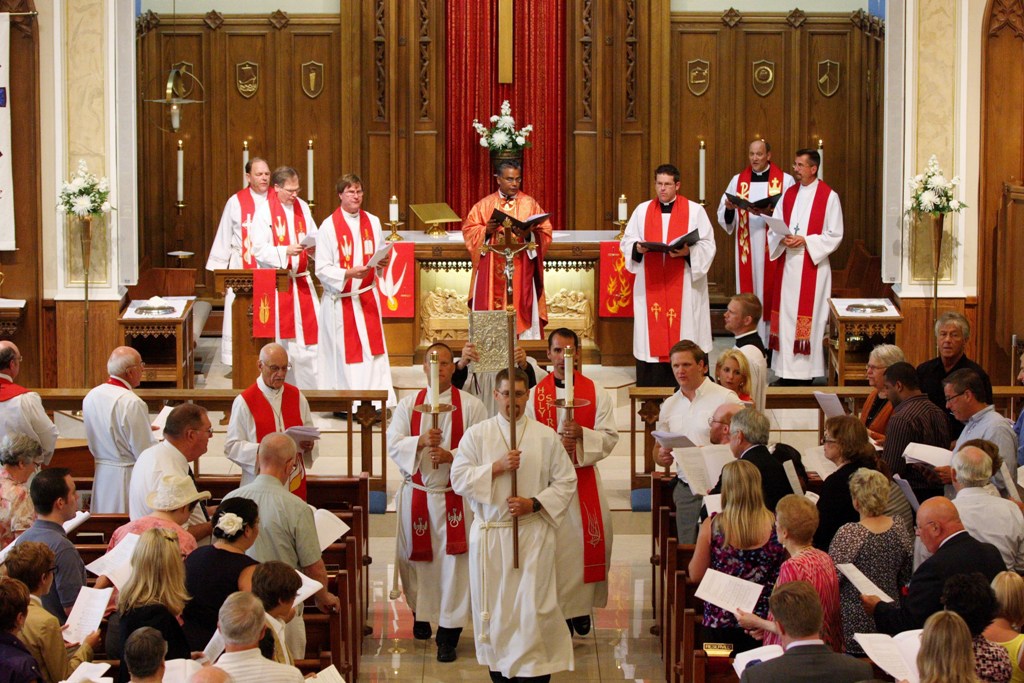
The second thing is to celebrate the incarnation. That is, the incarnation “must be preached, taught, confessed, and believed” which is “summed up for us in the second article of the Apostles’ Creed and the Nicene Creed and presented to us in the year of the church” (p. 99). We confess God the Son made flesh in the person of Jesus and we celebrate this redemption arc of God’s Story during the entire church year but especially during Advent, Christmas, and Epiphany. The incarnate Jesus comes to us during divine worship. “As a result of his incarnation he is now bodily present with us as God and man in the service of worship in order to pardon and redeem us, purify and sanctify us, body and soul for life with God the Father” (p. 99).
Third, we are to receive “medicine for body and soul,” which is given to us in the Eucharist (p. 100). As Luther says, “For here in the sacrament you receive from Christ’s lips the forgiveness of sins, which contains and convey’s God’s grace and Spirit with all his gifts, protection, defense, and power against death and the devil and all evils” (LC Part 5, 68).
Finally, we are to do holy work, also called mercy work. “From a human point of view, we do these good works in obedience to God’s law; from a divine point of view, we do God’s works by faith in the gospel of Jesus and the power of his Holy Spirit. Our good works do not make us holy; God’s Spirit-inspiring, Spirit-giving word makes us and our works holy. There are, indeed, two kinds of holy work: the prayerful work of faith, which makes us holy because we hear God’s word and receive Christ’s holy body and blood, and the active work of obedience to God’s word that we do because we have been made holy” (p. 101).
This reminds me of something Rev. Dr. Roosevelt Gray said in his sectional during the 2022 Making Disciples for Life Conference in January. He presented six narratives of Christ as a model for 21st-century mission and ministry. One of them was Jesus’s great compassion, that we need to feel as Jesus felt. Jesus felt compassion for people. The Greek word for this is σπλάγχνον (splagchnon), which its verb (σπλαγχνίζομαι, splagchnizomai) denotes this profound, inner emotional moving of the entrails toward a person. Today, we usually call this “sympathy” or “pity.”
It’s difficult to describe this word, so perhaps I can better frame compassion by asking two questions: Do we feel compassion for homeless people, or do we shrug and think, “It’s their own fault”? When we see somebody who’s broken, do our hearts break, or do we think, “Pathetic”? More often than not, we are the latter of both questions, which exposes our hardness of heart rather than the compassion we are called to have toward the needy and the suffering.
We are redeemed not only bodily but also spiritually, and our spiritual bodies is what the next chapter covers—that we are not souls that “have” bodies or bodies that “have” souls, but that we are “body-souls” (נֶפֶשׁ, nephesh). Therefore, our spiritual bodies will also be physical bodies.
 The Lutheran Column